
Why Ground Cover Changes Everything
Bare soil in a garden is an invitation for weeds, erosion, and moisture loss. Ground cover plants solve all three problems at once while adding beauty, texture, and in many cases fragrance to your landscape. They fill the gaps between stepping stones, cascade over retaining walls, carpet slopes where mowing is dangerous, and create living mulch beneath taller plants. Once established, most ground covers need almost no maintenance — far less than the weeding, mulching, and watering that bare soil demands.
Creeping Thyme: The Fragrant All-Star
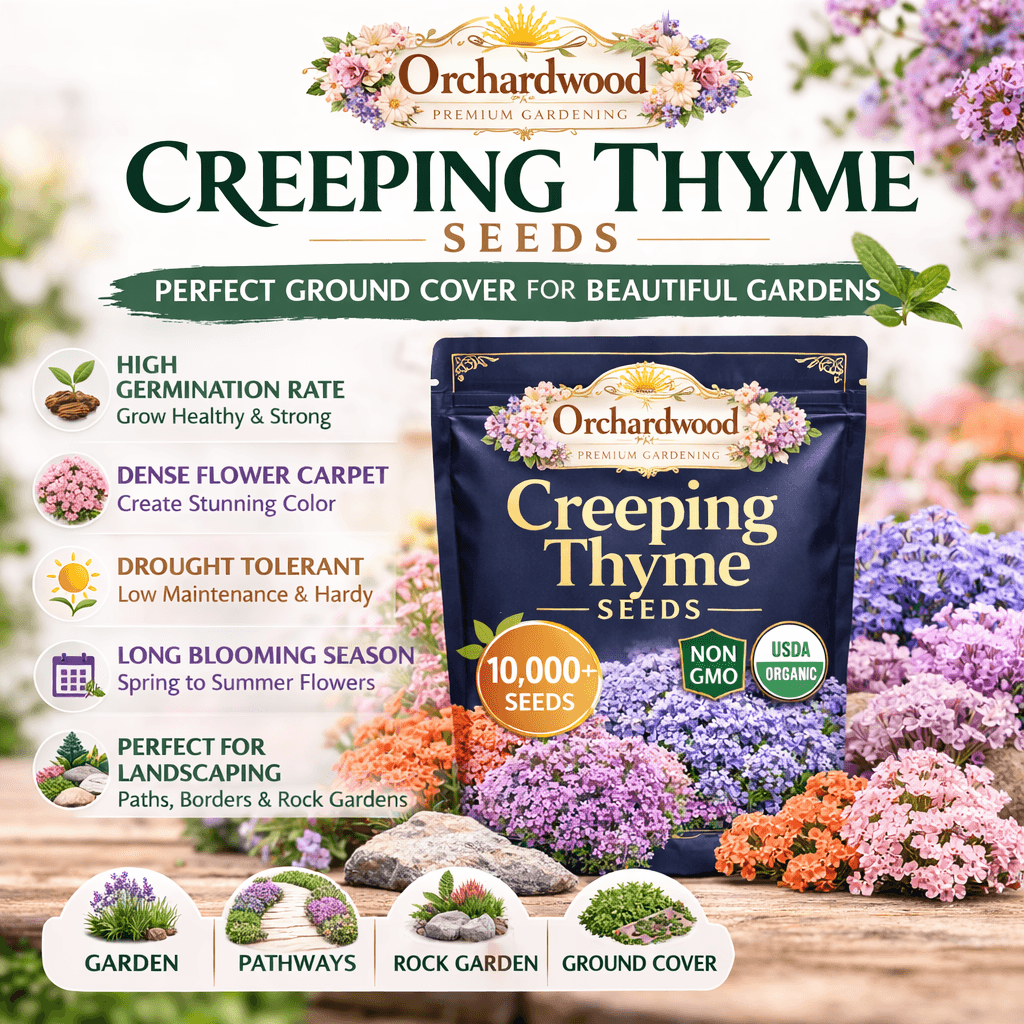
Creeping thyme (Thymus serpyllum) is one of the most versatile and beloved ground covers available. It forms a dense, aromatic mat just 2 to 4 inches tall, studded with tiny lavender, pink, or white flowers from early to mid-summer that bees absolutely adore. Hardy in USDA zones 4 through 9, it thrives in full sun and well-drained, even poor or gravelly soil — rich soil actually makes it grow leggy and loose. Space plants 6 to 12 inches apart in spring after the last frost. If starting from seed, sow indoors 8 to 10 weeks before transplanting. Creeping thyme handles light foot traffic beautifully and releases a wonderful herbal fragrance when stepped on, making it perfect between stepping stones and along pathways. Water regularly during the first growing season to establish roots, then it becomes remarkably drought-tolerant. Every few years, cut plants back by half in early spring to rejuvenate woody growth.
Trifolium Repens: The Nitrogen-Fixing Ground Cover
White clover (Trifolium repens) is an entirely different kind of ground cover — a nitrogen-fixing legume that actually improves your soil as it grows. Its dense, low mat of three-lobed leaves stays green even in drought conditions that would brown out a traditional lawn. Miniature clover varieties grow just 2 to 4 inches tall and tolerate heavy foot traffic, making them an excellent lawn alternative or filler between garden beds. Clover is remarkably easy to establish from seed: scatter it over prepared soil in spring or early fall, keep moist until germinated, and it fills in rapidly. It requires no fertilizer — ever — because it produces its own nitrogen through a symbiotic relationship with soil bacteria. This also means it feeds neighboring plants, making it an excellent companion ground cover beneath ornamental flowers or around the base of climbing roses.
Annual Phlox and Dianthus: Colorful Ground-Level Bloom
For fast, colorful ground coverage from seed, annual phlox is hard to beat. Growing just 6 to 12 inches tall, it produces dense clusters of sweetly fragrant blooms in vibrant pinks, purples, and whites. It fills borders and adds a carpet of living color to bare patches within a single growing season. Dianthus deltoides (maiden pinks) is another outstanding low ground cover, forming a tight mat of blue-green foliage topped with delicate pink flowers through summer. Both attract butterflies and other pollinators to the ground layer of your garden, creating activity and interest at every height.
Ground Cover as Living Mulch
One of the smartest uses for ground cover is planting it beneath taller flowers and shrubs as living mulch. Creeping thyme under climbing roses is a classic combination — the thyme suppresses weeds, retains soil moisture, attracts pollinators, and creates a beautiful textural contrast with the roses above, all while requiring almost no care. White clover around the base of sunflowers or hollyhocks feeds the soil with nitrogen while keeping weeds down. For shady spots, forget-me-nots and primroses can serve as a flowering ground layer beneath larger plants, providing delicate spring color where creeping thyme wouldn't get enough sun.