
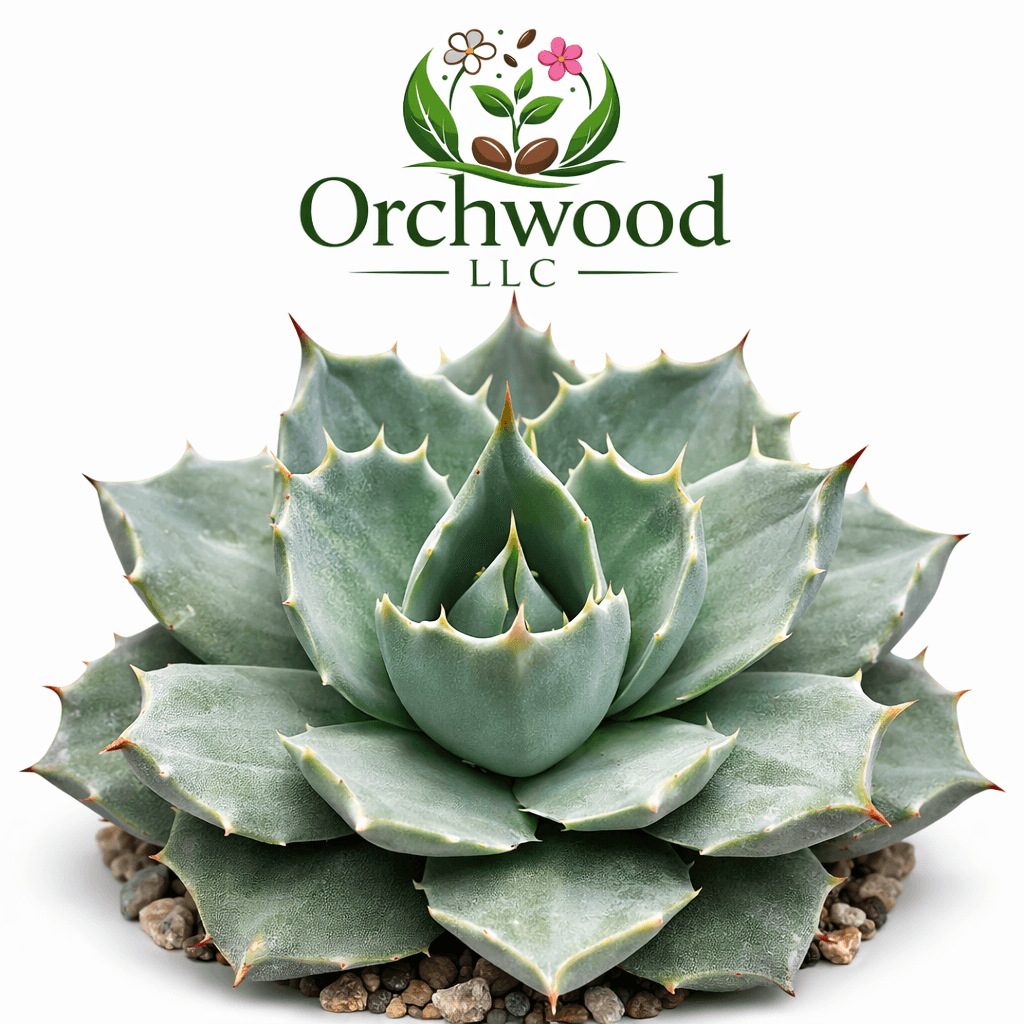
About Agaves
Agaves are bold, architectural succulents that add dramatic structure to any collection. Queen Victoria agave (Agave victoriae-reginae) is among the most prized — its compact, dome-shaped rosettes feature dark green leaves edged with striking white markings. Molded wax agave (Agave isthmensis) has thick, waxy leaves with a sculpted appearance. Shiroshima agave features stunning cream-and-green variegated foliage. All three are slow-growing, long-lived, and remarkably easy to care for.
Light
Agaves can handle full, direct sun and actually prefer it — they're among the most sun-tolerant succulents. A south-facing window is ideal for indoor growing. They tolerate lower light but will grow more slowly and may stretch. Outdoor agaves thrive in full sun positions. Queen Victoria agave appreciates some protection from the most intense afternoon sun in very hot climates (zones 9+).
Watering
Agaves store substantial water in their thick leaves and need very infrequent watering. During spring and summer, water every 2 to 3 weeks, allowing soil to dry completely between waterings. In winter, reduce to once a month or less. Overwatering is the most common way to kill an agave — when in doubt, don't water. They're far more likely to survive drought than soggy roots.
Soil & Containers
Use extremely well-draining soil — cactus mix amended with extra perlite, pumice, or coarse sand (aim for 50-60% mineral content). Agaves develop strong root systems over time, so choose deeper pots than you would for echeverias. Terracotta pots are ideal for moisture management. Ensure drainage holes are present and functioning.
Propagation & Long-Term Care
Agaves produce offsets (pups) around their base, though more slowly than echeverias. Separate pups when they're at least 3 to 4 inches across, ideally keeping some roots attached. Let the cut dry for a day before potting. Agaves are slow growers — Queen Victoria agave takes many years to reach its full 12-to-18-inch diameter. They're worth the wait. Watch for mealybugs in the leaf crevices. Display agaves alongside echeverias and lithops for contrasting shapes — the agave's bold architecture against the echeveria's soft rosettes and lithops' strange pebble forms creates a fascinating collection.