
About Houseleeks
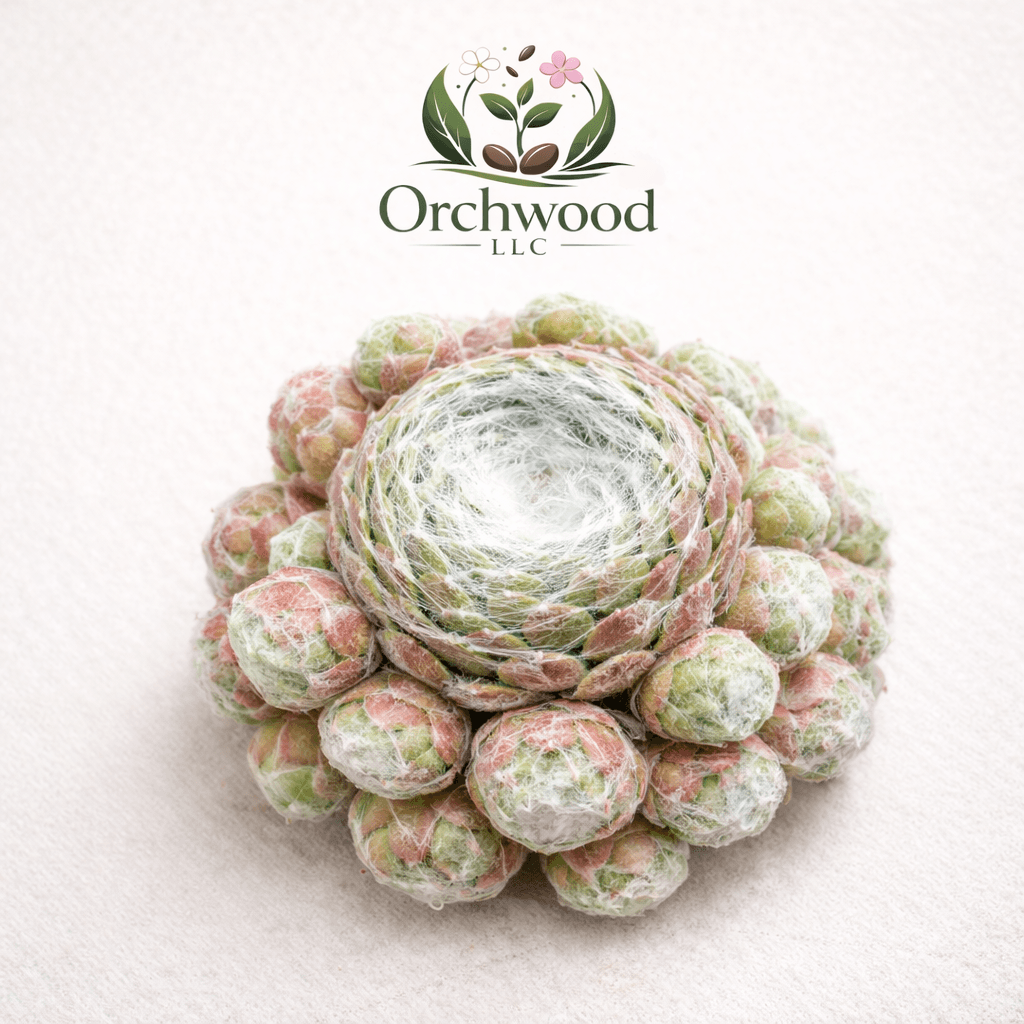
Houseleeks (Sempervivum) are the hardiest succulents you can grow — surviving temperatures down to -20°F or lower, making them one of the few succulents that thrive outdoors year-round in cold climates. Cobweb houseleek (Sempervivum arachnoideum) forms small rosettes adorned with fine white cobwebby hairs crisscrossing between leaf tips — a genuinely unique and captivating look. Purple houseleek develops deep burgundy-purple coloring, especially in bright light and cool temperatures. Both produce clusters of rosettes that spread freely.
Light
Houseleeks prefer full sun but perform well in partial light shade. They develop their most vivid colors (deeper purples, reds, and bronzes) in bright light with cool temperatures. Indoors, give them the brightest window available. They're among the most adaptable succulents for outdoor rock gardens, walls, and containers.
Watering
Use the soak and dry method: water thoroughly, then let soil dry completely before watering again. Houseleeks are extremely drought-tolerant and far more likely to be killed by overwatering than underwatering. In outdoor settings, rainfall is often sufficient. In winter, especially outdoors, they need almost no supplemental water. Avoid water pooling in the rosette center, particularly for cobweb houseleeks where moisture trapped in the "web" can cause rot.
Soil & Planting
Use very well-draining soil — 25 to 50% sand, gravel, perlite, or pumice mixed with standard potting soil. Houseleeks thrive in rock gardens, stone walls, shallow trays, and even in the crevices of old stone walls where almost no soil exists. They don't need deep pots or rich soil — lean, gritty conditions are perfect. Hardy in zones 3 to 8.
Propagation
Houseleeks earn their "hens and chicks" nickname by producing abundant offsets around the mother rosette. Wait until chicks are at least 1 inch (2 cm) across, then separate by gently breaking or cutting the connecting stolon. Plant immediately in gritty soil — they root very quickly. The mother rosette eventually dies after flowering (monocarpic), but by then she's usually produced dozens of offspring. Display alongside echeverias, golden sedum, and creeping thyme for a textured, low-maintenance rock garden.