About Allium Giganteum
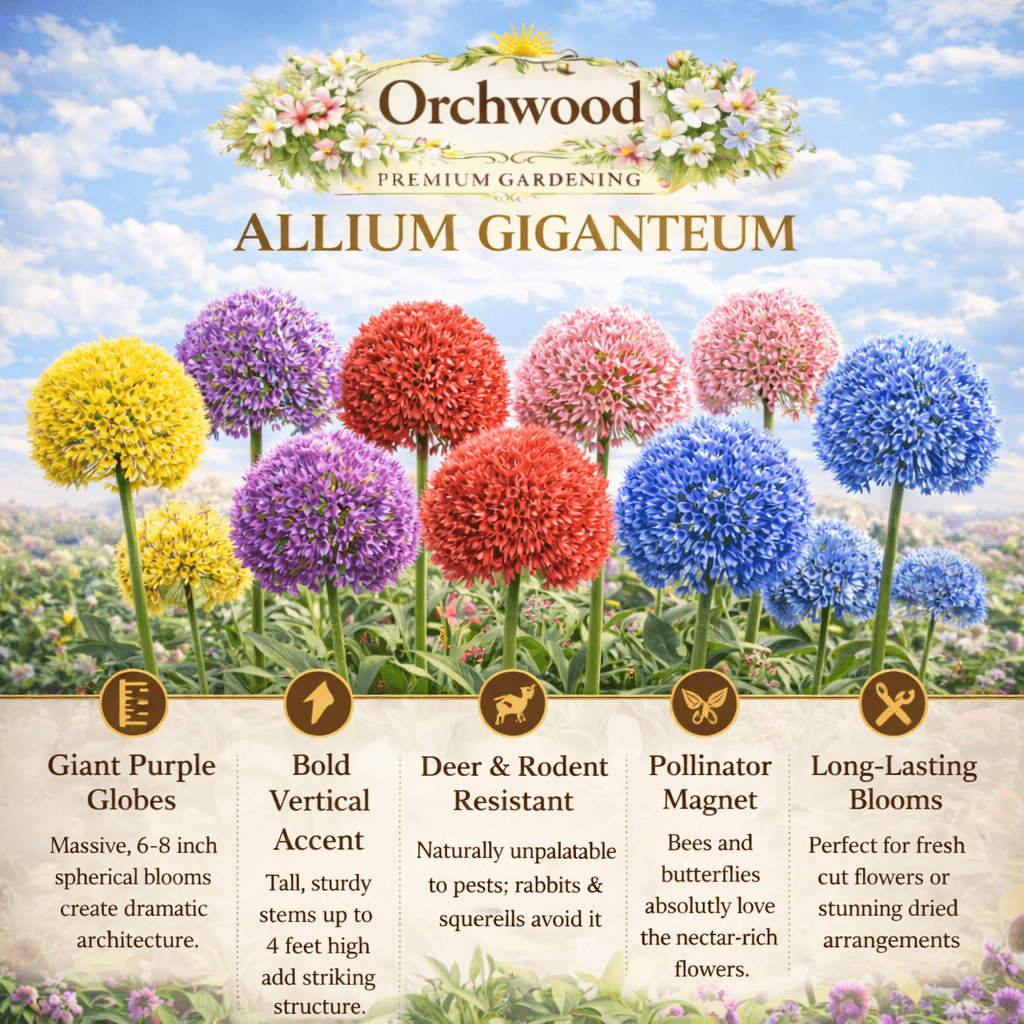
Allium giganteum is one of the most dramatic ornamental bulbs you can plant. Its enormous, perfectly spherical purple flower heads — up to 6 inches across — sit atop straight, sturdy stems reaching 3 to 4 feet tall. The effect is architectural and almost surreal, like giant lollipops rising from the garden. As a member of the onion family, alliums are naturally deer and rabbit resistant, and the dried seed heads remain decorative for months.
Planting
Plant allium bulbs in fall, at the same time as tulips and other spring-planted bulbs. Dig holes 6 inches deep and space bulbs 8 to 12 inches apart, pointed end up. Plant in groups of 3 to 5 for maximum visual impact. Like all bulbs, good drainage is essential — waterlogged soil causes rot.
Growing Conditions
Choose a spot with full sun and well-drained, moderately fertile soil. Alliums are extremely adaptable and tolerate a range of soil types as long as drainage is good. They're drought-tolerant once established and thrive in zones 5 to 8.
Watering & Care
Water after planting in fall. During the growing season, water moderately — alliums prefer conditions on the drier side. Apply a balanced bulb fertilizer when shoots appear in spring. The foliage begins to yellow and fade as the flowers open, which is normal — plant annual phlox, cosmos, or other annuals around alliums to camouflage the dying leaves.
After Flowering
Leave the dried seed heads on the stems — they're beautiful through summer and fall, adding structural interest to the garden even after flowering is done. They also look stunning in dried flower arrangements. Alliums gradually naturalize, forming larger clumps over the years. Divide clumps every 3 to 4 years if they become overcrowded. They combine spectacularly with irises, late tulips, and ornamental grasses.