
About Anemones
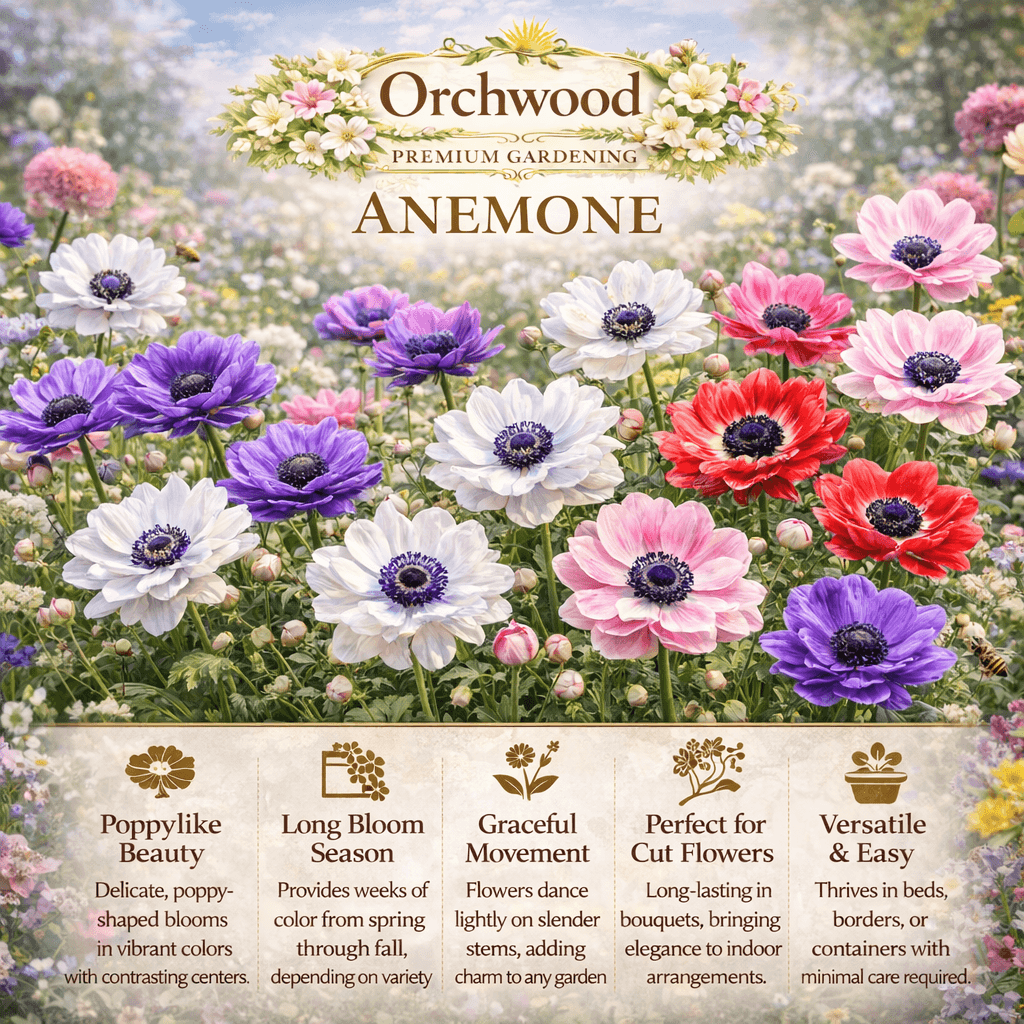
Anemones (Anemone coronaria) produce stunning, jewel-toned blooms with dark, dramatic centers — available in vivid purples, hot pinks, and lavenders. The poppy-like flowers grow on wiry stems 12 to 18 inches tall and are among the most sought-after spring flowers for bouquets. They're also outstanding garden plants, blooming generously over several weeks in spring.
Pre-Planting: Soaking
Anemone corms look like small, dried, lumpy pebbles. Before planting, soak corms in room-temperature water for 3 to 4 hours to rehydrate them — they'll plump up noticeably. Don't soak longer than 4 hours, as they can rot.
Planting
Plant corms 2 to 3 inches deep and 2 to 3 inches apart. Anemone corms are unusual in that they don't have an obvious "right side up." If in doubt, plant on their side — they'll figure it out. In zones 7-10, plant in fall for spring blooms. In colder zones (4-6), plant in late winter to early spring as soon as the ground can be worked, or start in trays indoors and transplant out.
Growing Conditions
Choose a spot with full sun to partial shade in rich, well-drained soil. Anemones prefer cool growing conditions — they bloom best in the cool temperatures of spring and decline in summer heat. They're relatively low-maintenance and naturalize well in the right conditions.
Care & Harvesting
Water regularly during active growth to keep soil evenly moist. Feed lightly with a balanced fertilizer when shoots emerge. For cut flowers, harvest when buds are showing color but not fully open — they'll continue to open in the vase and last 7 to 10 days. After flowering, let foliage die back naturally to recharge corms. In cold zones, dig and store corms for winter like ranunculus. They pair beautifully with tulips, ranunculus, and forget-me-nots in spring gardens and bouquets.