
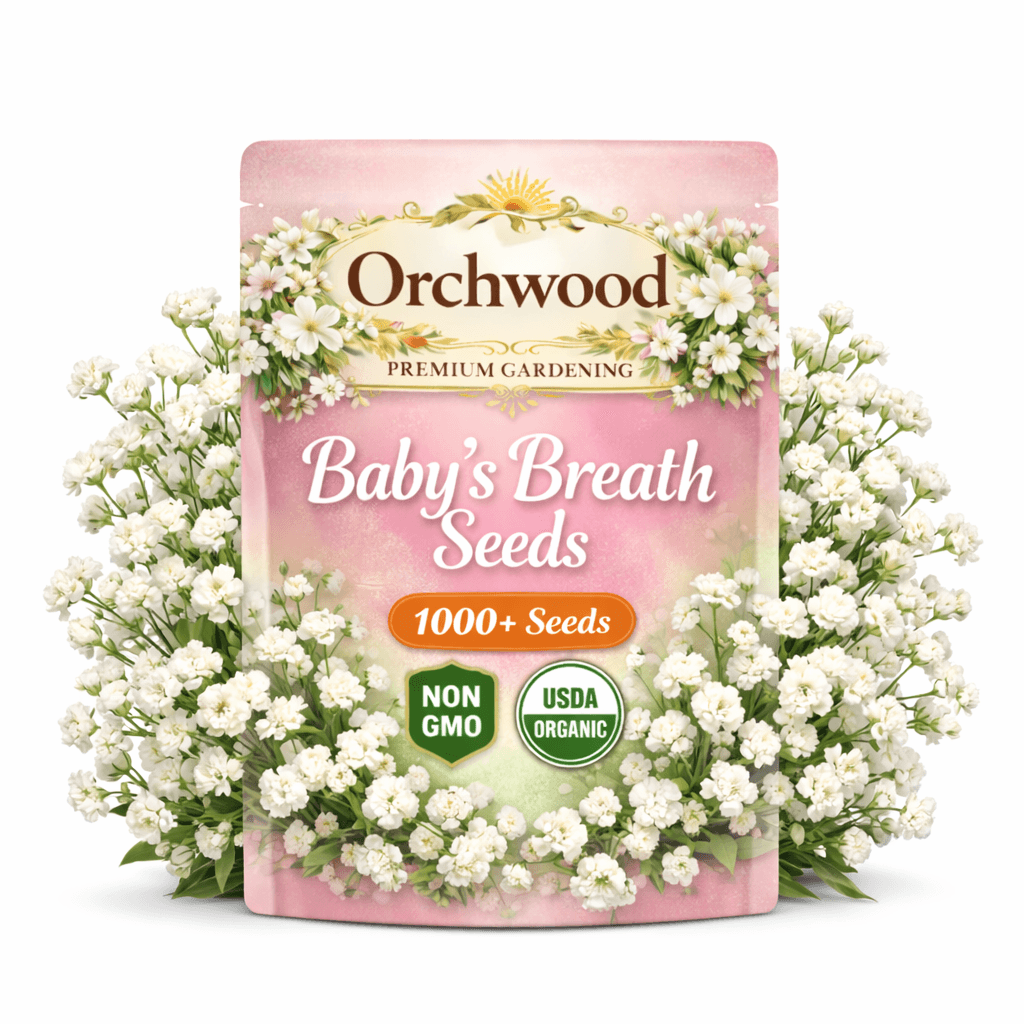
About Baby's Breath
Baby's breath (Gypsophila) produces airy clouds of tiny white or pink flowers on delicate, branching stems. A staple of florist bouquets, it's equally beautiful in the garden — creating a soft, hazy backdrop that makes bolder flowers pop. Growing 18 to 36 inches tall, it's drought-tolerant, deer-resistant, and thrives in the lean, alkaline soils that many other plants dislike.
Starting from Seed
Start seeds indoors 6 to 8 weeks before last frost, or direct sow after the last frost date. Sow seeds 1/8 inch deep, barely covering them — they benefit from light for germination. Keep soil at 60-70°F. Germination is fast, about 7 to 10 days. For a continuous supply of cut flowers, succession sow every 3 to 4 weeks through early summer.
Growing Conditions
Plant in full sun (6+ hours daily). Baby's breath strongly prefers well-drained, alkaline to neutral soil (pH 7.0-7.5). It performs poorly in heavy, acidic, or waterlogged soil. Sandy or gravelly soil is ideal. If your soil is acidic, work in some garden lime before planting. Space plants 12 to 18 inches apart. Avoid rich, heavily composted beds — fertile soil causes floppy, overgrown plants.
Watering & Care
Baby's breath is drought-tolerant once established and prefers drier conditions. Water sparingly — overwatering causes root rot. Do not mulch heavily, as moisture retention around the crown promotes disease. Pinch plants back to the next node when they reach 8 to 12 inches tall to encourage branching and more flower sprays. Deadhead to prolong blooming.
Cut Flowers & Companions
For cut flowers, harvest when about half the blooms on a stem are open. Baby's breath dries beautifully — hang stems upside down in a dark, airy spot for 2 weeks. In the garden, it creates a beautiful "filler" effect between bolder flowers like sunflowers, dahlias, and climbing roses. Its cloud-like texture provides wonderful contrast to the strong forms of lisianthus and gerbera daisies in bouquets.