About Balsam
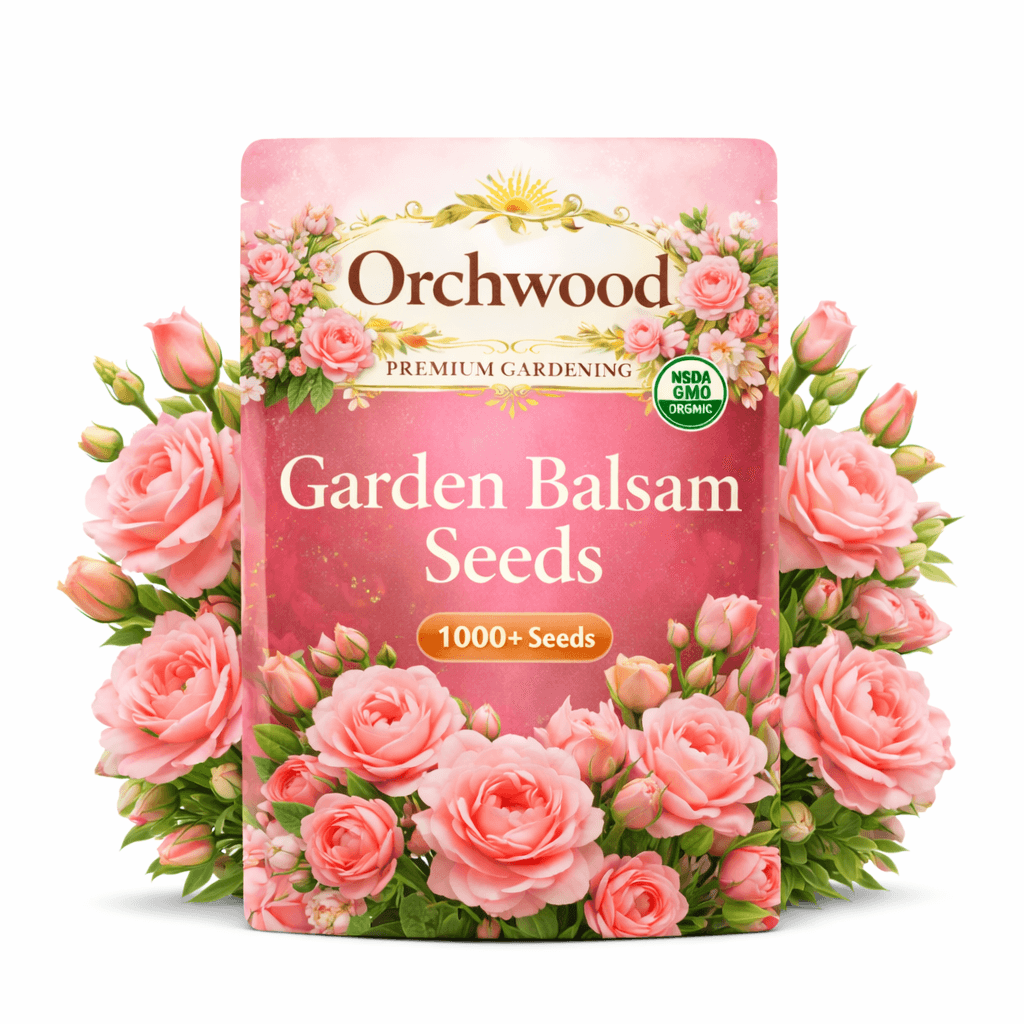
Balsam (Impatiens balsamina), also called garden balsam or touch-me-not, produces charming camellia-like double blooms clustered along upright stems reaching 12 to 30 inches tall. The flowers come in shades of pink, red, white, purple, and salmon. Unlike most flowering annuals, balsam performs beautifully in partial shade, making it invaluable for adding color to shaded garden areas.
Starting from Seed
Start seeds indoors 6 to 8 weeks before the last frost, or direct sow after all frost danger has passed. Sow seeds on the surface of moist seed-starting mix and press lightly — balsam seeds benefit from light for germination. Use a heat mat set to 60-70°F. Germination takes 14 to 21 days. Keep the medium consistently moist. Once seedlings have several true leaves and are a few inches tall, they're ready for transplanting.
Planting Out
Transplant after the last frost when nighttime temperatures stay above 50°F. Plant in partial shade to full sun — balsam is one of the rare flowers that blooms well in both conditions, as long as it receives adequate moisture. Space plants 12 to 18 inches apart in rich, well-drained soil amended with compost. Balsam thrives in soil that's fertile and high in organic matter.
Watering & Feeding
Keep soil consistently moist — about 1 inch of water per week. Balsam needs more moisture than many annuals, especially in sunny locations. Mulch around plants to retain soil moisture. Do not let plants dry out completely, as they wilt quickly in dry conditions. Feed every 3 to 4 weeks with a balanced liquid fertilizer during the growing season.
Ongoing Care
Balsam is relatively low-maintenance once established. The plants bloom continuously through summer without deadheading, though removing spent blooms keeps the display tidy. They self-sow readily — if you want them to return next year, let some seed pods mature and burst. Balsam makes an excellent companion for begonias and forget-me-nots in shady garden beds. The mature seed pods burst open when touched, which is how the plant gets its "touch-me-not" common name.