About Corn Poppies
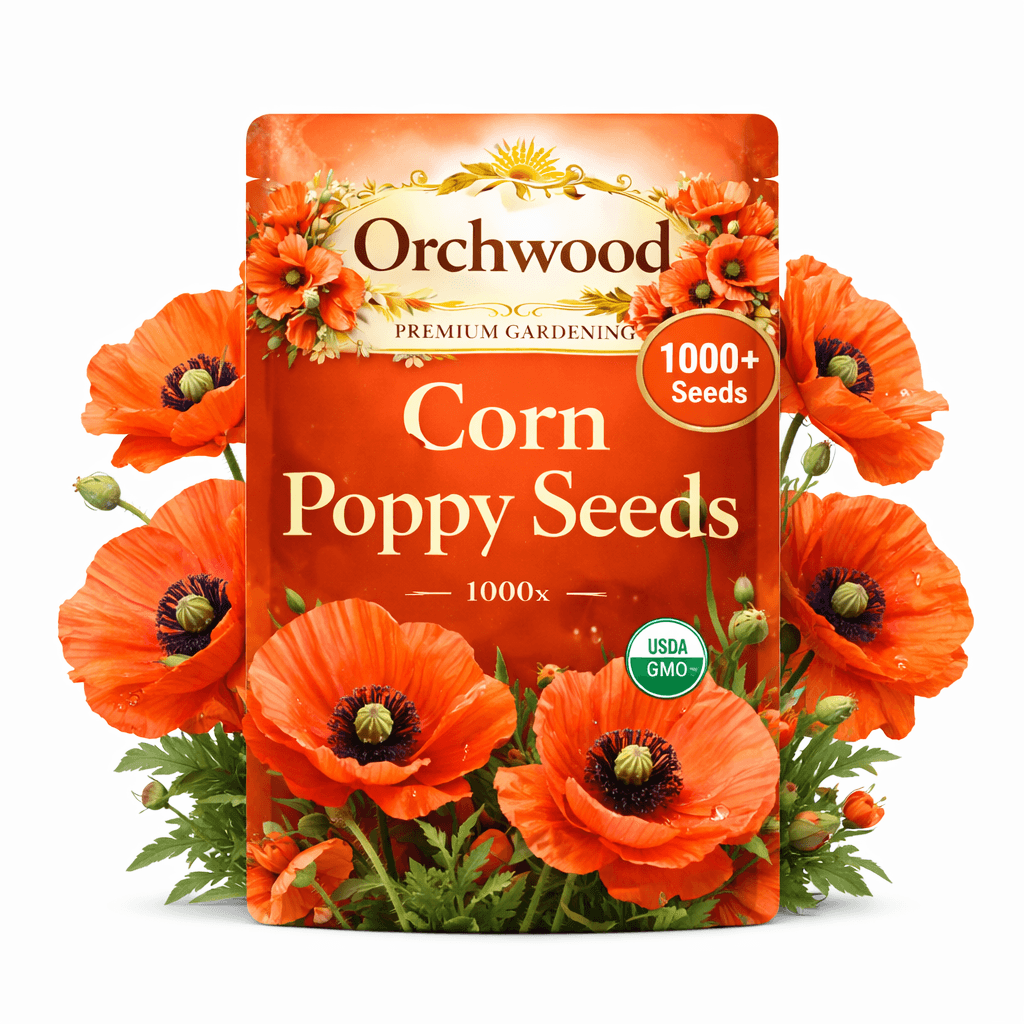
The corn poppy (Papaver rhoeas) is one of the easiest and most rewarding wildflowers you can grow. Its delicate, papery petals in vivid scarlet create a breathtaking display that looks far more difficult to achieve than it is. These hardy annuals self-sow freely, naturalizing to create stunning drifts of color year after year. They thrive in poor soil and dry conditions — the exact spots where most garden flowers struggle.
Direct Sowing
Corn poppies strongly prefer direct sowing because their long taproots make transplanting difficult. Sow seeds outdoors 4 weeks before your last frost date when soil temperatures reach about 55°F (13°C). In zones 8+, fall sowing produces even stronger spring results. Mix the extremely fine seeds with a handful of sand for even distribution. Scatter the seed-sand mixture over raked, firm soil, then press gently with your palm. Do not cover the seeds — they require light to germinate. Expect seedlings in 10 to 20 days.
Growing Conditions
Choose a spot with full sun — at least 6 hours daily. Corn poppies genuinely prefer poor, well-drained soil. Rich, fertile beds produce excessive foliage and fewer flowers. Sandy, gravelly, or rocky soil is ideal. Avoid areas where water pools after rain. This makes them perfect for dry borders, hillsides, and meadow plantings where other flowers fail.
Watering & Care
During germination, mist gently to keep seeds moist without washing them away. Once established, corn poppies are remarkably drought-tolerant and need very little supplemental water. Do not fertilize. Thin seedlings to 6 to 8 inches apart. Deadhead spent flowers to extend blooming, but leave the last seed pods to dry on the stems for self-sowing next year.
Companion Plants
Corn poppies look stunning paired with cosmos for continuous meadow-style color. Plant them in front of climbing roses on a fence for a classic cottage garden effect. Creeping thyme makes a beautiful ground cover beneath their airy stems. They also pair wonderfully with baby's breath and black-eyed Susans in wildflower borders.