About Cosmos
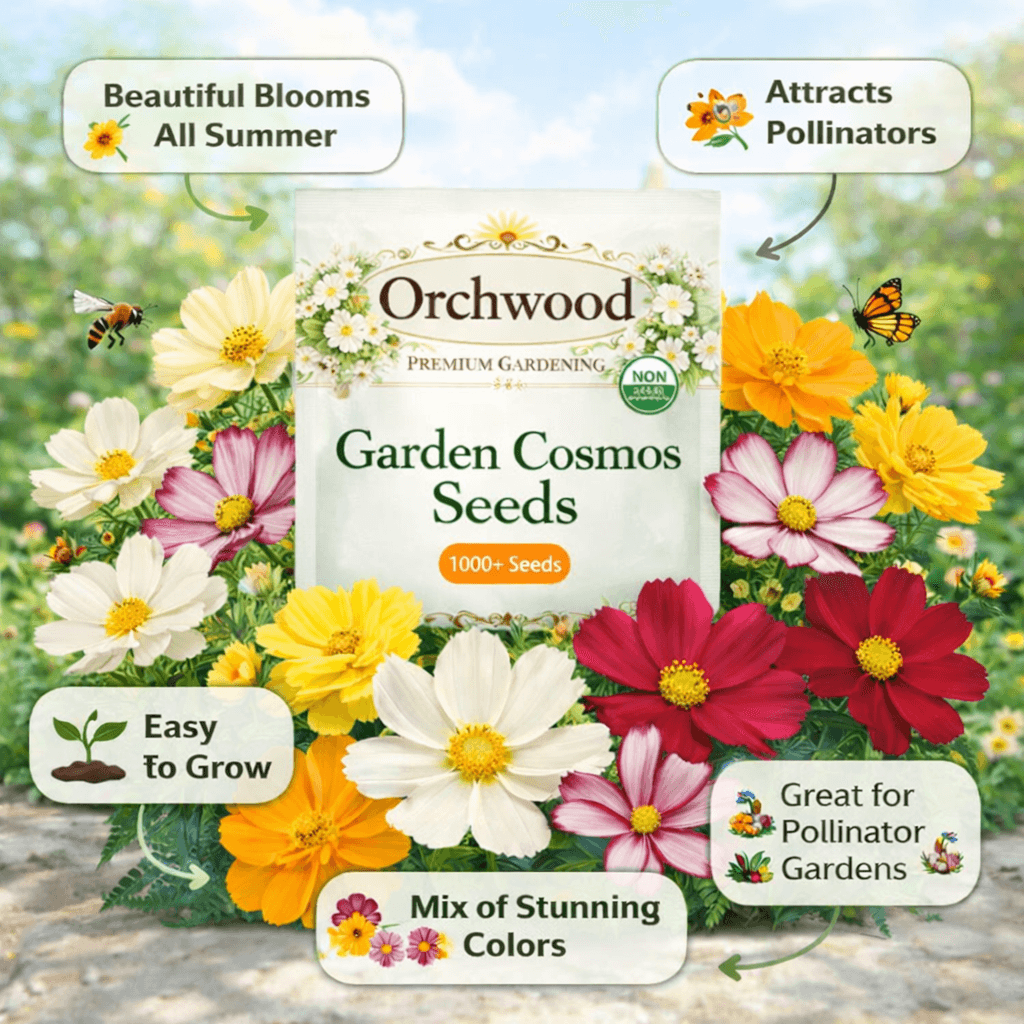
Cosmos (Cosmos bipinnatus and C. sulphureus) are among the most forgiving and rewarding flowers a gardener can grow. Their daisy-like blooms in pink, white, orange, yellow, and crimson dance atop ferny, airy foliage that sways gracefully in the breeze. Growing 2 to 5 feet tall depending on variety, they bloom prolifically from midsummer until frost and are outstanding pollinator magnets — bees, butterflies, and hoverflies work the open, accessible flowers all day long.
Starting from Seed
Cosmos are spectacularly easy from seed. Start indoors just 4 to 6 weeks before last frost, or direct sow outdoors once soil warms to 60°F. Sow seeds 1/4 inch deep. Germination is fast — 3 to 10 days at 70-75°F. Indoor-started seedlings transplant easily. For direct sowing, scatter seeds over prepared soil, cover lightly, and water gently.
Planting Out
Choose a spot with full sun — 6 to 8 hours minimum. Space plants 12 to 18 inches apart. Here's the counterintuitive secret to great cosmos: plant them in average to poor soil. Rich, fertile soil produces tall, leggy plants with lots of foliage and fewer flowers. Lean soil and moderate drought stress keep plants compact and loaded with blooms. Well-drained soil is important — cosmos dislike wet feet.
Watering & Feeding
Water moderately during establishment, then sparingly once plants are growing strongly. Cosmos are quite drought-tolerant and actually bloom more heavily when not overwatered. Do not fertilize — supplemental nutrients cause lush foliage and reduced flowering. If your soil is naturally fertile, just leave it and don't add amendments.
Ongoing Care
Deadhead spent blooms regularly to encourage continuous flowering. If plants get too tall and floppy, stake them or plant them where they can lean on a fence. For a longer bloom season, succession sow every 2 to 3 weeks from last frost through early summer. Cosmos self-sow freely — leave some spent flowers at end of season if you want volunteer plants next year. They make excellent cut flowers and pair beautifully with sunflowers, corn poppies, and lisianthus in both the garden and the vase.