
About Creeping Thyme
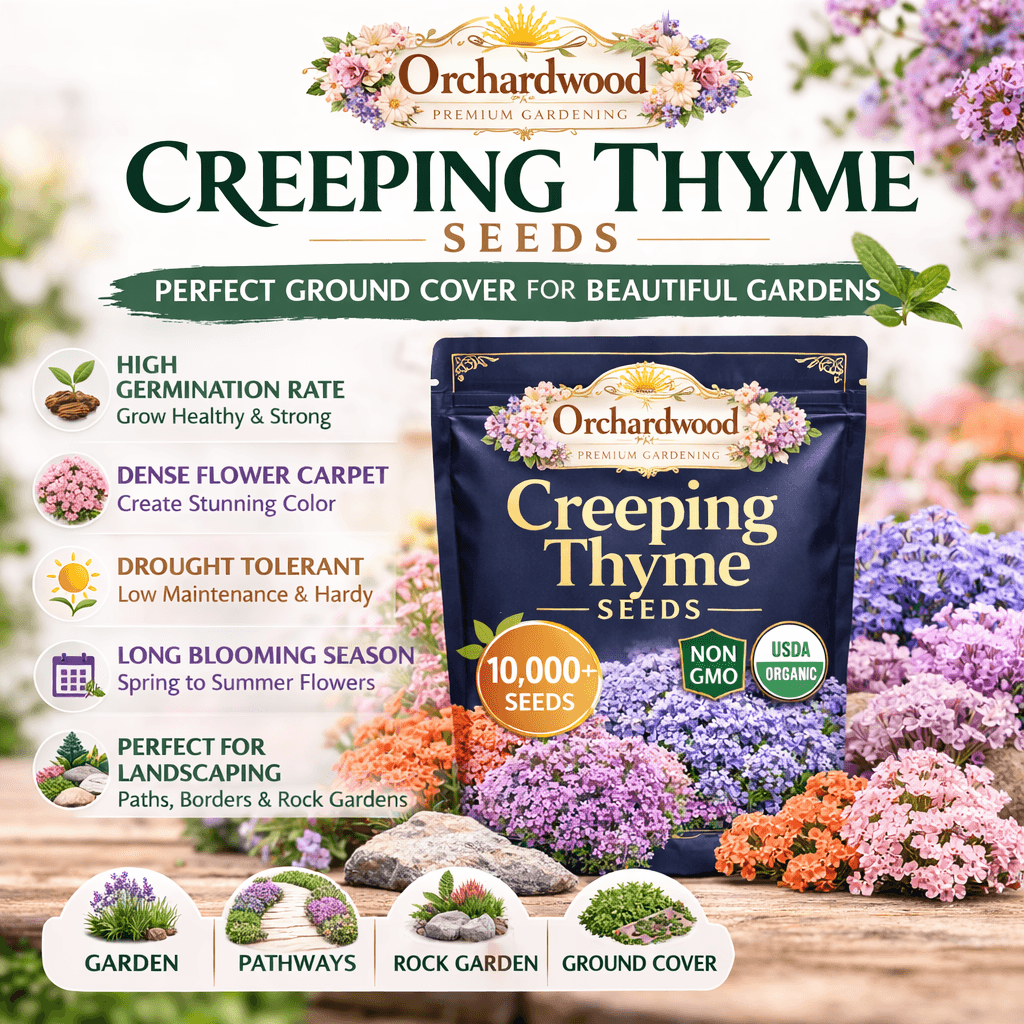
Creeping thyme (Thymus serpyllum) is one of the most versatile plants in the garden. It forms a dense, aromatic mat just 2 to 4 inches tall, studded with tiny lavender, pink, or white flowers in early to mid-summer that bees adore. It handles light foot traffic, releases a wonderful herbal fragrance when stepped on, suppresses weeds, and thrives in the poor, dry conditions where lawn grass struggles. Hardy in zones 4 through 9, it's nearly indestructible once established.
Starting from Seed
Start seeds indoors 8 to 10 weeks before the last frost. Sow on the surface of moist seed-starting mix and press lightly — thyme seeds are tiny and need light to germinate. Do not cover. Mist to keep consistently moist. Germination takes 14 to 21 days at 65-70°F. Seedlings grow slowly; be patient. You can also direct sow in spring after the last frost, though indoor starting gives a significant head start.
Planting Out
Transplant in spring after the last frost. Choose a spot with full sun — 6+ hours daily. Plant in well-drained, lean soil. Creeping thyme actually performs best in poor, gravelly, or sandy soil — rich, fertile soil causes leggy, loose growth. Space plants 6 to 12 inches apart; they'll fill in to form a solid carpet within 1 to 2 seasons. Perfect locations: between stepping stones, along pathways, over retaining walls, or as a lawn alternative in sunny areas.
Watering & Care
Water regularly during the first growing season to establish roots. After that, creeping thyme is remarkably drought-tolerant and needs supplemental water only during prolonged dry spells. Do not fertilize — thyme prefers lean soil. Avoid heavy mulching, which retains too much moisture around the stems.
Maintenance & Companions
Every 3 to 4 years, cut plants back by half in early spring before new growth begins to rejuvenate woody growth and keep the mat dense. Creeping thyme is a classic companion for climbing roses — planted at the base, it suppresses weeds, retains moisture, attracts pollinators, and adds fragrance and textural contrast. It also pairs beautifully with dianthus deltoides between stepping stones and alongside trifolium repens for a mixed ground cover.