About Gerbera Daisies
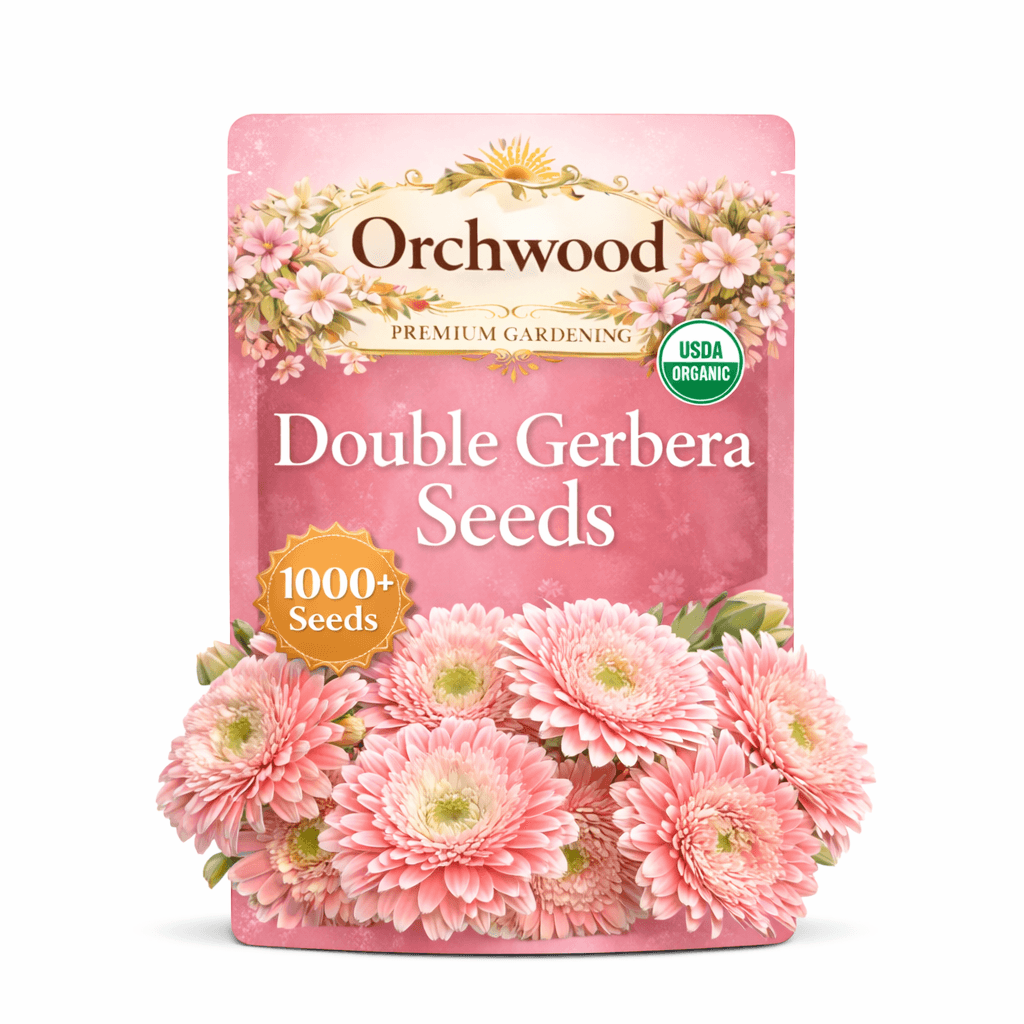
Gerbera daisies produce large, bold, graphic blooms in vivid reds, oranges, pinks, yellows, and whites — each flower a perfect circle of layered petals radiating from a clean center. Double gerbera varieties offer even more petal density and drama. Growing 12 to 18 inches tall, they're outstanding cut flowers with good vase life and equally striking in containers and garden borders.
Starting from Seed
Start seeds indoors 10 weeks before the last frost. Fill trays with light, well-draining seed-starting mix. Place each seed with the pointed end down and the fluffy brush tip just above the soil surface. Keep soil above 70°F and consistently moist (not soggy). Cover with clear plastic for humidity. Germination takes 14 to 21 days. Provide 8+ hours of bright light daily after germination.
Transplanting
When seedlings have 2 sets of true leaves, transplant to larger pots. Use peat or paper pots to minimize root disturbance — gerberas are sensitive to transplant shock. Harden off before planting outdoors after the last frost. Choose a spot with morning sun and afternoon shade — gerberas love light but wilt in intense midday heat. Space 12 to 15 inches apart. Critically, plant so the crown sits slightly above soil level — burying the crown causes rot.
Watering & Feeding
Water at the base of plants to keep foliage dry — wet leaves encourage fungal diseases. Water when the top inch of soil is dry, roughly 1 inch per week. Gerberas are moderate feeders; apply a balanced liquid fertilizer every 2 to 3 weeks during the growing season.
Cut Flowers & Care
For cut flowers, harvest when petals are fully open. Cut stems at an angle and place immediately in clean water. Gerbera stems can be soft — support them in the vase with a grid of tape over the opening. They combine beautifully with lisianthus, baby's breath, and sunflowers in arrangements. In the garden, pair with cosmos and annual phlox for a colorful cutting bed.