About Gladiolus
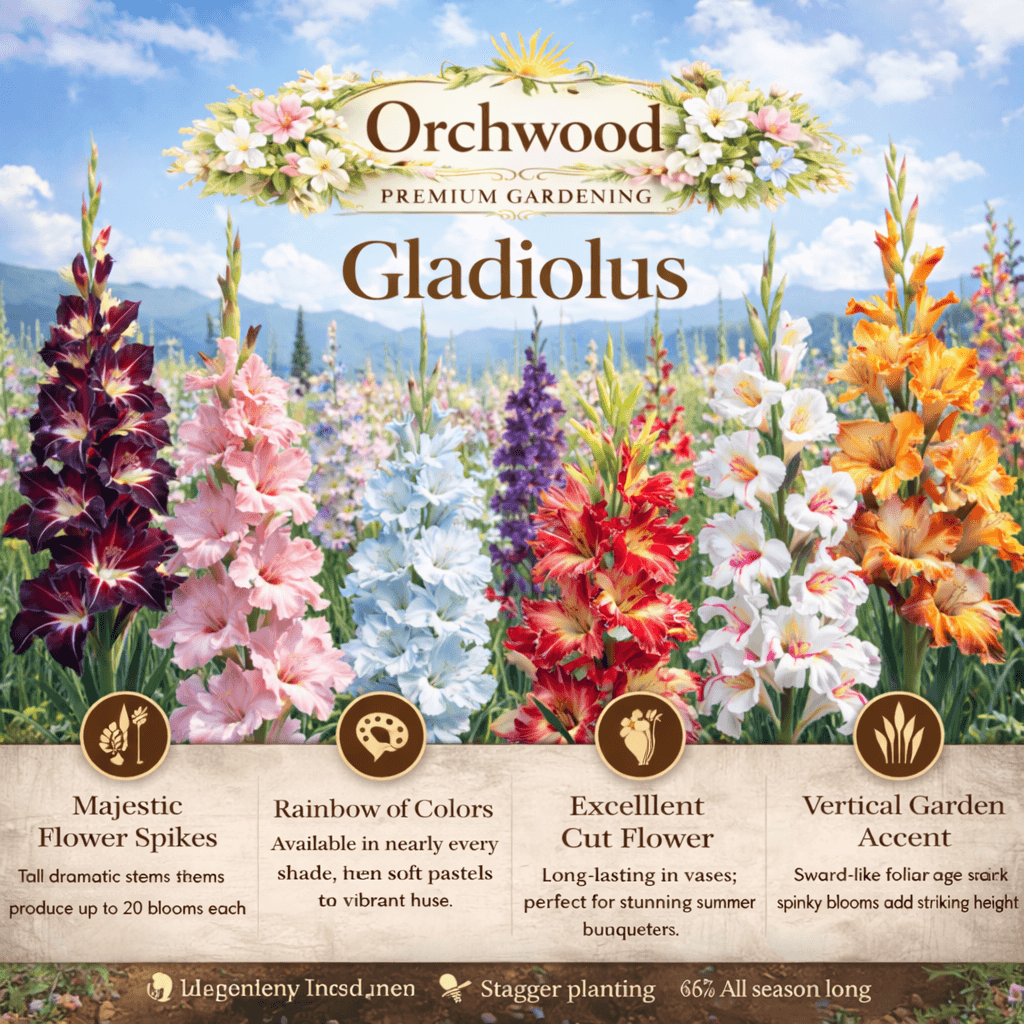
Gladiolus produce tall, sword-like spikes of funnel-shaped flowers in a spectacular range of colors — reds, whites, oranges, light blues, peaches, blushes, and striking red-and-white bicolors. Growing 2 to 5 feet tall, they're dramatic in the garden and among the finest cut flowers you can grow. Each spike opens from bottom to top over about 2 weeks, providing a long display both in the garden and the vase.
Planting
Plant corms in spring, after the last frost, when soil has warmed. Plant 4 to 6 inches deep with the pointed end up. Space 6 to 8 inches apart. For the largest blooms, use corms that are at least 1-1/4 inches in diameter. The key technique for gladiolus is staggered planting: plant a new batch every 10 to 14 days from last frost through early summer for continuous blooms from midsummer through fall.
Growing Conditions
Choose a spot with full sun and well-drained, fertile soil. Gladiolus dislike heavy, wet soil. Amend with compost before planting. They perform well in zones 7-10 and can be grown as annuals (lifting corms in fall) in colder zones.
Staking & Care
Tall varieties need staking — install stakes at planting time. Water regularly during growth, about 1 inch per week. Feed with a balanced fertilizer when flower spikes begin to emerge. It takes 60 to 90 days from planting to bloom, depending on variety.
Cutting & Overwintering
For cut flowers, harvest when the bottom 2 to 3 florets are showing color — the rest will continue opening in the vase, lasting up to 10 days. Cut with a sharp knife, leaving at least 4 leaves on the plant to feed the corm. After the first frost, dig up corms, cut stems to 1 inch, cure for 2 to 3 weeks in a warm, dry location, then store in mesh bags in a cool (35-45°F), dry place. Gladiolus look stunning in tall arrangements with sunflowers, lilies, and lisianthus.