
About Hollyhocks
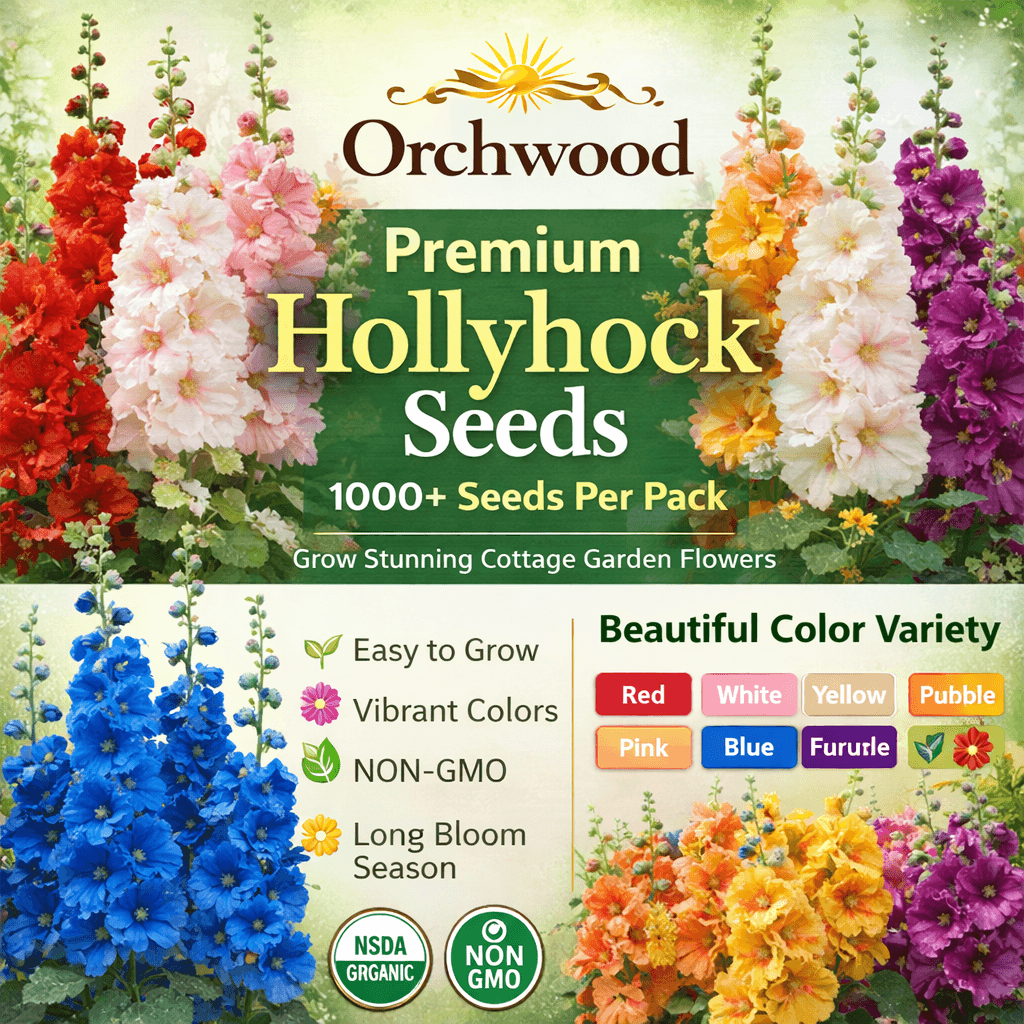
Hollyhocks (Alcea rosea) are the most magical cottage garden flower — their towering spires of saucer-sized blooms reaching 5 to 8 feet tall are an unforgettable sight against a fence, wall, or garden boundary. Flowers come in a stunning range of colors including pinks, reds, oranges, yellows, whites, and deep burgundy. Most common varieties are biennials that grow foliage the first year and bloom spectacularly in the second, then self-sow to continue the cycle indefinitely.
Starting from Seed
Start seeds indoors 9 weeks before the last frost, or direct sow outdoors about a week before the last frost date. Plant seeds 1/4 inch deep. Soaking seeds in warm water (about 113°F) for 12 hours before sowing significantly improves germination rates and speed. Germination takes 10 to 14 days at 60-70°F. Use tall individual pots for indoor starts, as hollyhocks develop long taproots early — transplant before roots become pot-bound. Direct sow or fall-sown seeds produce the strongest plants.
Planting Out
Plant in full sun (at least 6 hours daily) in a sheltered location — against a south-facing wall or fence is ideal, providing both warmth and wind protection for the tall stems. Space plants 18 to 24 inches apart in well-drained soil. Hollyhocks tolerate poor soil but grow tallest in moderately fertile ground amended with some compost. Good air circulation between plants helps prevent disease.
Managing Hollyhock Rust
The biggest challenge with hollyhocks is rust — a fungal disease causing orange-brown spots on leaves. Prevent it by watering at the base (never overhead), ensuring good air circulation, and doing thorough fall cleanup of all dead foliage. Remove any leaves showing rust spots immediately and dispose of them — don't compost. Planting rust-resistant varieties (like Alcea rugosa) helps significantly.
Ongoing Care
Stake tall varieties to prevent wind damage, or plant against a fence for natural support. Let some seed pods mature for self-sowing — once established, hollyhocks perpetuate themselves indefinitely in the garden. They're stunning backdrop plants behind cosmos, corn poppies, and nasturtiums, or alongside climbing roses on a cottage garden wall. Creeping thyme at their base creates a beautiful low-high contrast.