About Hyacinths
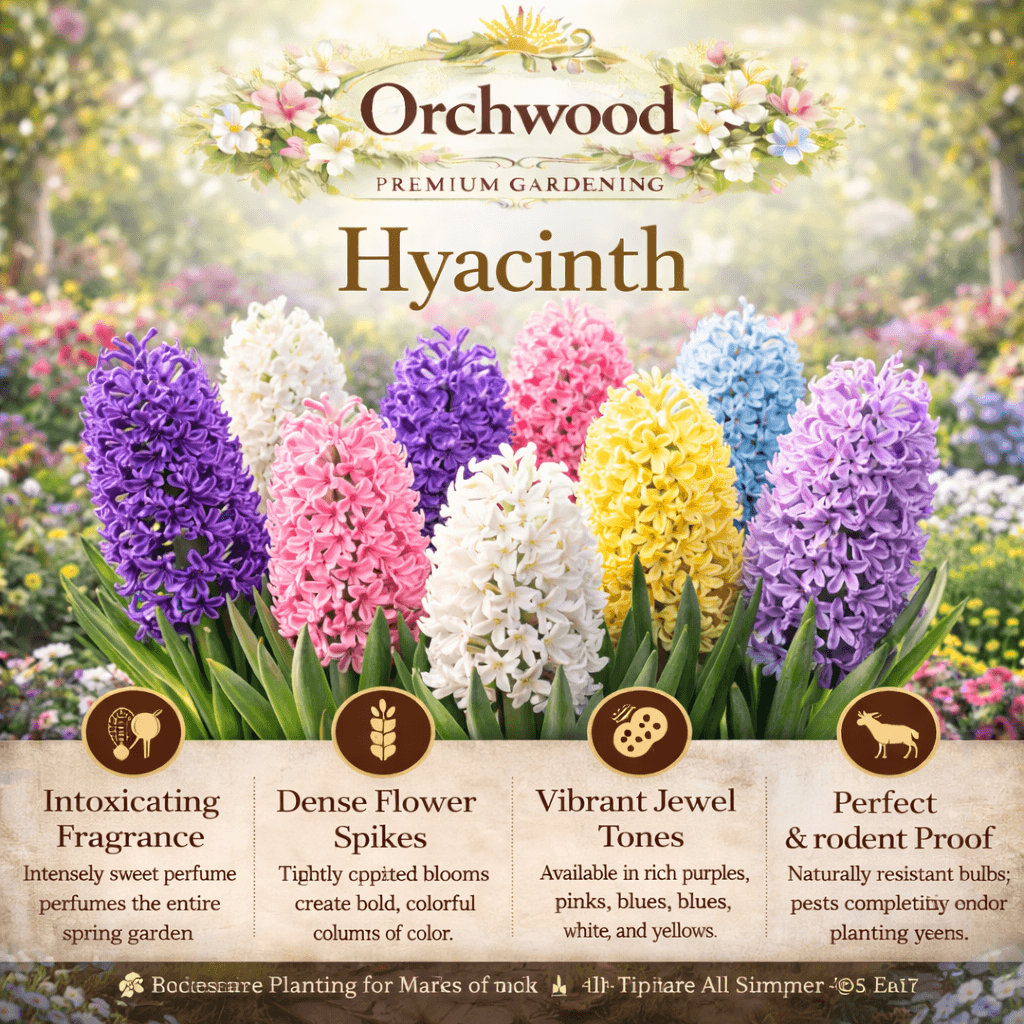
Hyacinths produce dense, columnar spikes of star-shaped flowers in blues, pinks, oranges, and mixed colors — and they're among the most fragrant spring flowers you can grow. A single hyacinth can perfume an entire garden bed, and a cluster of them creates an intoxicating scent experience. Growing 8 to 12 inches tall, they're perfect for borders, containers, and indoor forcing.
Planting
Plant hyacinth bulbs in fall, 6 to 8 weeks before the ground freezes. Dig holes 6 inches deep and space bulbs 6 inches apart, pointed end up. Plant in well-drained soil — like all fall-planted bulbs, waterlogged winter soil causes rot. Hyacinths prefer full sun but tolerate light shade. Note: some people find hyacinth bulbs irritate skin — wear gloves when handling.
Indoor Forcing
Hyacinths are outstanding for indoor forcing in winter. Place bulbs in a forcing vase (with the bulb sitting above water, roots trailing into it) or pot them in well-drained potting mix. Refrigerate potted bulbs for 12 to 14 weeks to simulate winter, then bring into warmth and light. Blooms appear within 2 to 3 weeks — bringing spring indoors months early.
Watering & Care
Water after planting in fall. During spring growth, keep soil moderately moist. After flowering, deadhead the spent flower spike but leave foliage intact until it yellows completely — this recharges the bulb. Hyacinth blooms are often slightly smaller in subsequent years but remain fragrant and beautiful. Feed with a balanced bulb fertilizer when shoots emerge in spring.
Companions
Hyacinths pair magnificently with tulips (stagger planting times for a relay of spring color), forget-me-nots (the blue carpet beneath pink hyacinths is iconic), and early pansies. In containers, combine with primroses for a fragrant spring display. The fragrance makes hyacinths ideal for planting near doorways, patios, and paths where you'll walk past them daily.