About Double Irises
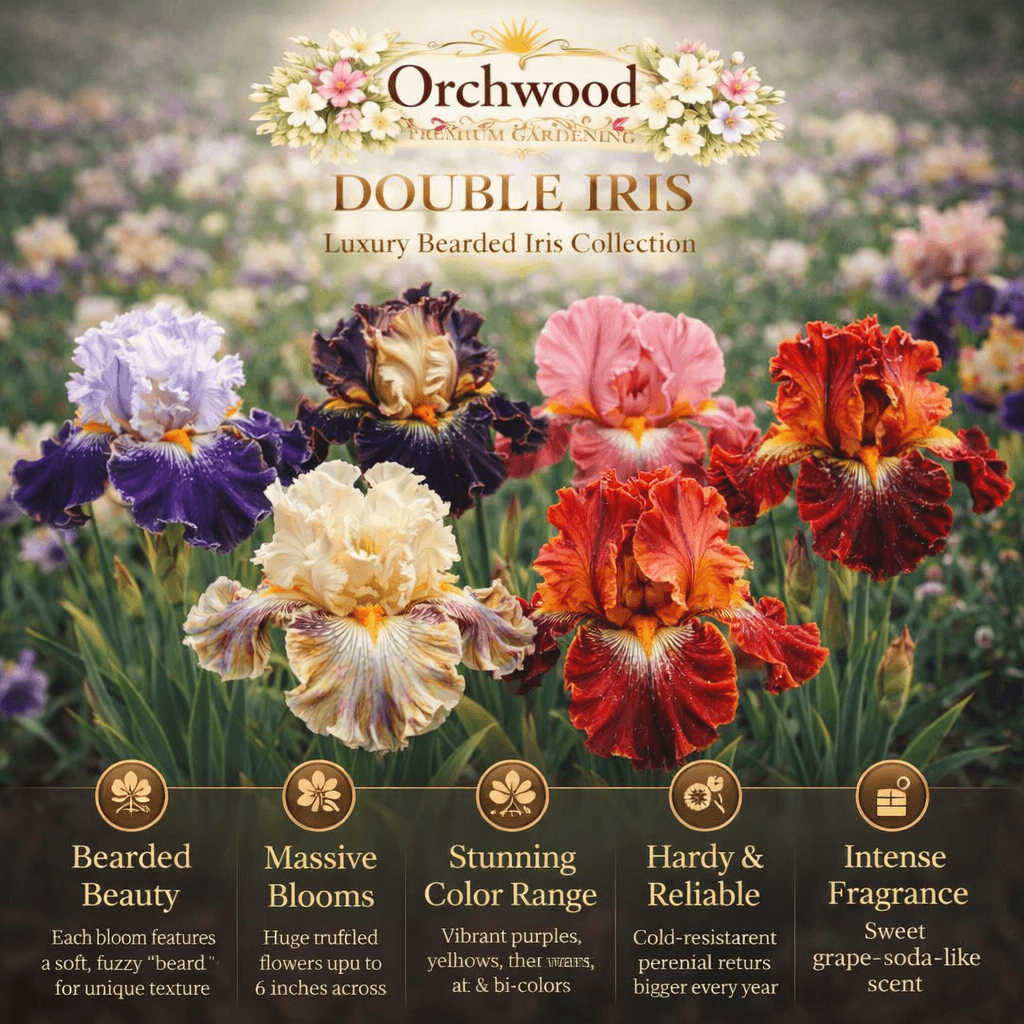
Double irises produce intricate, multi-layered blooms with twice the petals of standard irises, creating flowers of extraordinary complexity and beauty. Available in stunning color combinations — light blue, blue-and-white, peach-and-purple, cream, blush pink, rose-and-white, and navy-and-gold — they're among the most elegant flowers in the spring garden. Growing 24 to 36 inches tall, they make excellent cut flowers and striking border plants.
Planting
Plant iris rhizomes in late summer to early fall (July through September) for blooms the following spring. Dig a shallow hole and create a small mound of soil in the center. Place the rhizome on the mound with roots spread downward. Cover roots with soil but leave the top of the rhizome exposed — burying iris rhizomes too deeply is the most common cause of failure to bloom. Space 12 to 18 inches apart. The rhizome should sit at or just below the soil surface.
Growing Conditions
Irises need full sun — at least 6 hours daily — and excellent drainage. They thrive in slightly acidic to neutral soil (pH 6.0-7.0). Irises are extremely sensitive to wet feet; in heavy clay, plant in raised beds or amend soil generously with sand and compost. Good air circulation around plants helps prevent disease.
Watering & Feeding
Water after planting and during dry spells in the growing season. Avoid overwatering — irises are somewhat drought-tolerant and prefer drier conditions between waterings. Apply a low-nitrogen fertilizer in early spring as growth begins. Avoid high-nitrogen feeds, which promote soft foliage growth susceptible to disease.
Ongoing Care
Deadhead spent flowers to keep plants tidy. After flowering, leave foliage intact until late fall — it feeds the rhizome. Cut fans back to 6 inches in late fall for a tidy winter appearance. Divide crowded clumps every 3 to 4 years in late summer, discarding old center sections and replanting healthy outer rhizomes. Irises look stunning with tulips and hyacinths for a relay of spring bloom, and alongside allium for late spring drama.