About Lisianthus
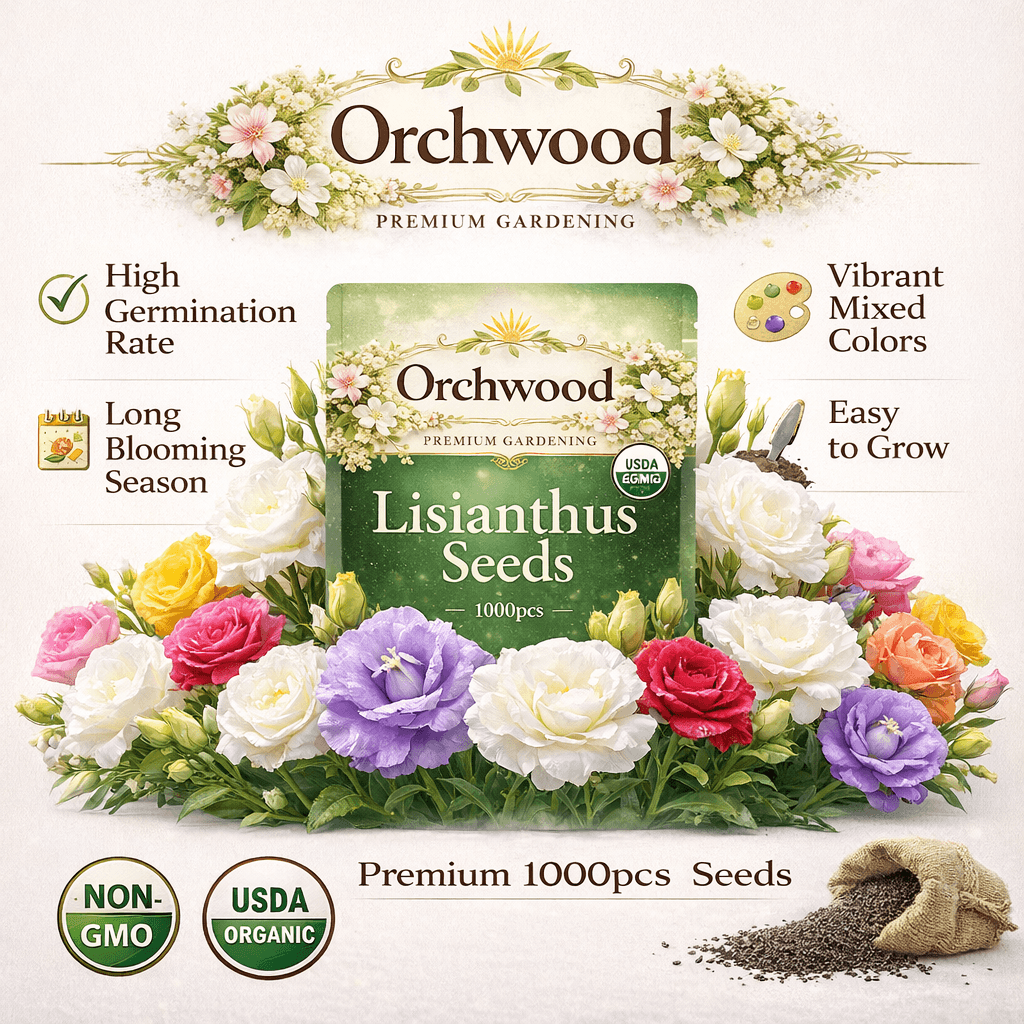
Lisianthus (Eustoma grandiflorum) produces exquisite ruffled, rose-like blooms that are a staple of professional florist bouquets. With an exceptional vase life of 10 to 14 days, they're among the most valuable cut flowers you can grow. Available in elegant shades of white, purple, green, pink, and bicolors, each stem produces multiple blooms on graceful, branching stems reaching 24 to 36 inches tall.
Starting from Seed — A Patient Gardener's Project
Lisianthus is the most challenging common flower to grow from seed, requiring an early start and careful attention. Begin 12 to 16 weeks before your last frost — most growers start in January or February. Sow pelleted seeds on the surface of moist seed-starting mix — do not cover. Cover trays thinly with vermiculite to control algae while allowing light through. Maintain 70-75°F day and night with a heat mat. Keep humidity high with a dome. Germination takes 14 to 21 days. Provide at least 12 hours of grow light daily.
Critical Early Care
After germination, reduce temperature to 60-65°F. This is crucial — temperatures above 80°F cause "rosetting," where plants produce only basal leaves and refuse to elongate. Keep seedlings at perfect moisture — not too wet, not too dry. Feed with half-strength liquid fertilizer every 2 weeks. Seedlings grow very slowly for the first 2 months, then accelerate. Transplant to larger pots when roots fill the cell.
Planting Out
Transplant after the last frost into full sun with afternoon shade in hot climates. Space 6 to 9 inches apart in rich, well-drained soil. Lisianthus prefers slightly alkaline soil (pH 6.5-7.0). Stake plants or provide support netting, as the flower-laden stems can be top-heavy.
Harvesting
For cut flowers, harvest when the first bloom on a stem is fully open and others are showing color. Cut in the morning and place immediately in clean water. The incredible vase life and rose-like beauty makes every month of growing effort worthwhile. In arrangements, lisianthus pairs beautifully with baby's breath, gerbera daisies, and ranunculus.