About Nasturtiums
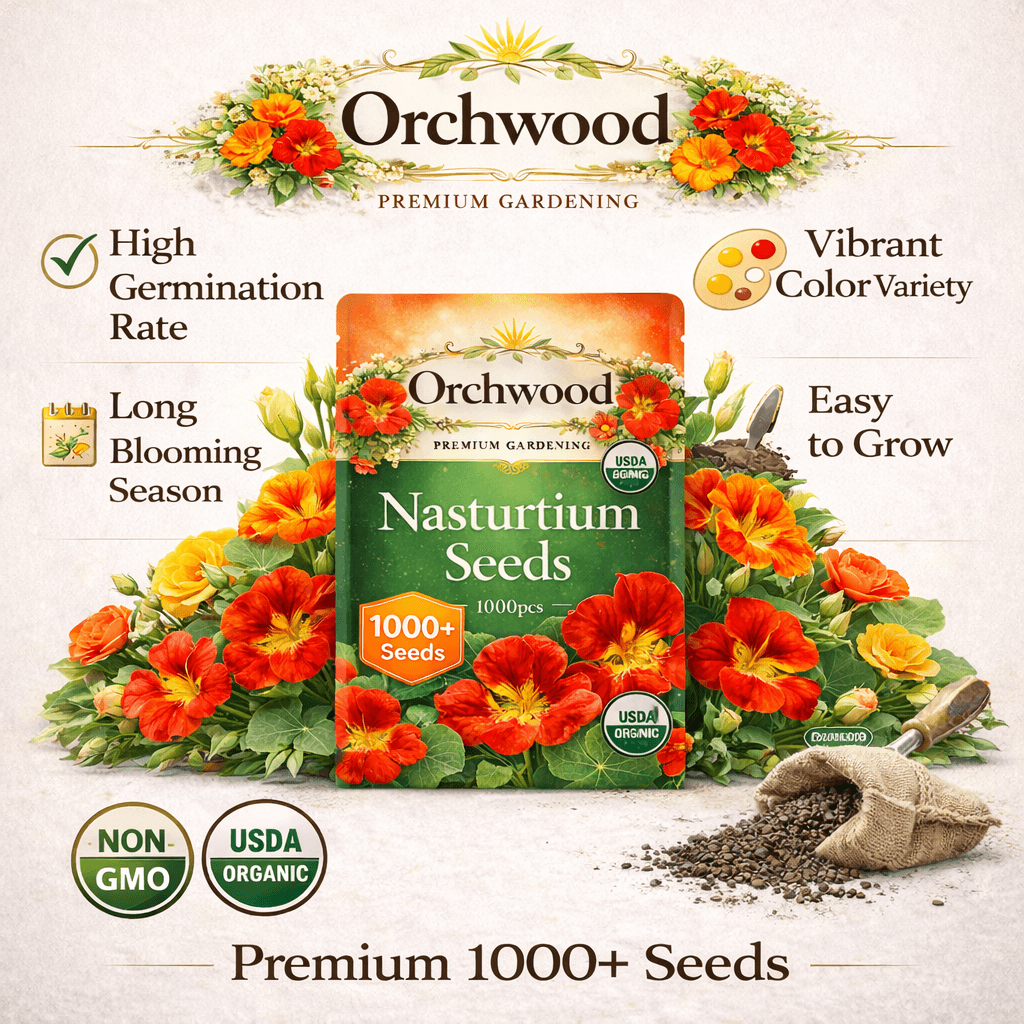
Nasturtiums (Tropaeolum majus) are fast-growing, cheerful annuals that produce a profusion of funnel-shaped flowers in fiery shades of orange, red, yellow, and cream above distinctive round, lily-pad-like leaves. Both the flowers and leaves are edible, with a peppery, watercress-like flavor. Trailing varieties cascade beautifully from containers and over walls, while compact bush types are perfect for borders. Nasturtiums attract hummingbirds with their tubular blooms.
Direct Sowing
Nasturtiums grow best when direct sown after the last frost, as they dislike root disturbance during transplanting. Plant the large, wrinkled seeds 1/2 to 1 inch deep and 8 to 12 inches apart. For faster germination, soak seeds in lukewarm water for 8 to 12 hours before planting to soften the hard outer coat. Germination takes 7 to 10 days. If you must start indoors, use peat or paper pots that can be planted directly in the ground.
Growing Conditions
Choose a spot with full sun to partial shade — nasturtiums bloom most heavily with 6+ hours of direct light. Here's the essential secret: plant in poor, lean soil. Rich, fertile soil or any fertilizer at all causes lush foliage at the expense of flowers. Average to sandy soil produces the best blooms. Well-drained soil is important — avoid areas where water collects.
Watering & Care
Water moderately, allowing soil to dry slightly between waterings. Nasturtiums are somewhat drought-tolerant once established and actually bloom better with modest water stress. Do not fertilize — this is one of the few plants that truly performs worse with feeding. Watch for aphids, which love nasturtiums. This can be used to your advantage: plant nasturtiums as a "trap crop" to lure aphids away from more valuable plants.
Harvesting & Companions
Harvest flowers and young leaves for salads — they add a beautiful, peppery accent. Pick flowers in the morning when they're most flavorful. Deadhead to prolong blooming, or let some seed pods mature for next year's crop. Nasturtiums are classic cottage garden plants that pair beautifully with corn poppies, cosmos, and hollyhocks. Their trailing habit makes them perfect spilling over the edges of raised beds or hanging baskets alongside petunias.