
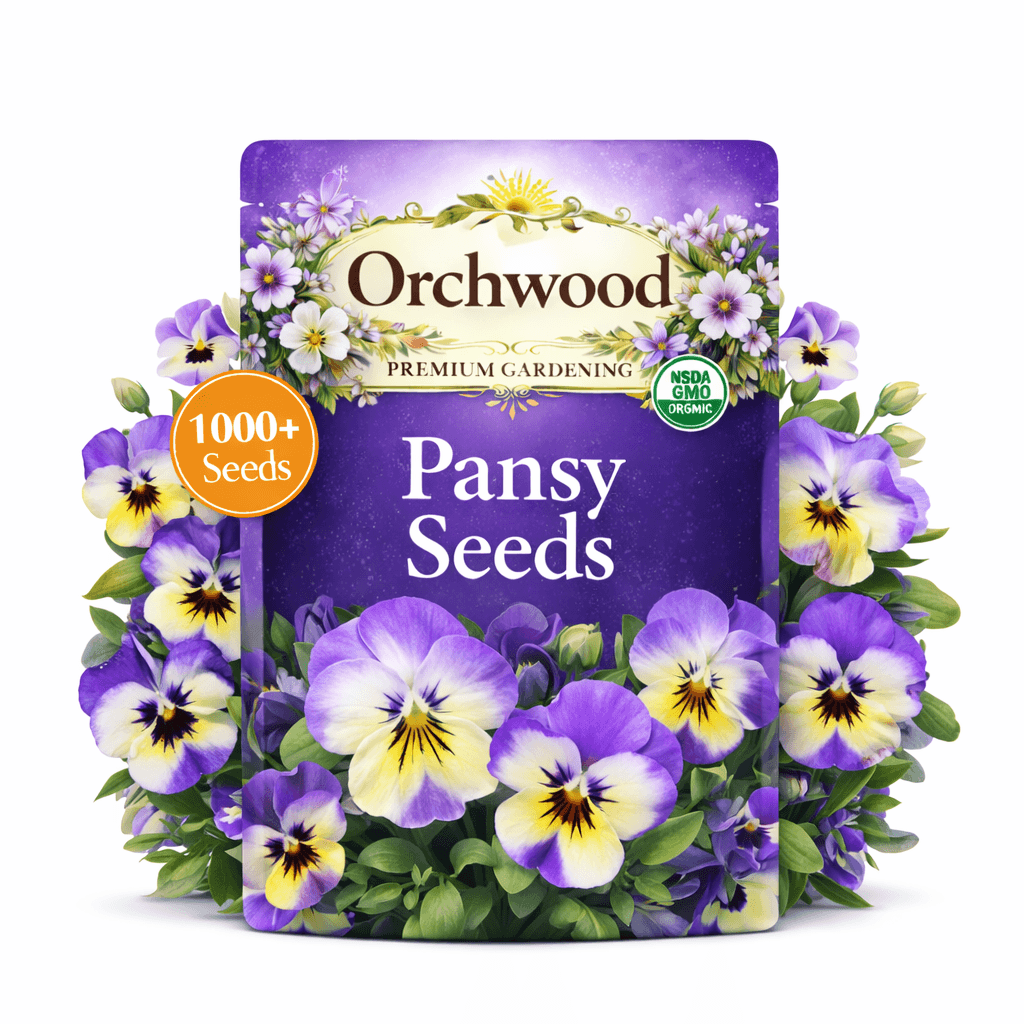
About Pansies
Pansies (Viola x wittrockiana) are cool-season annuals beloved for their cheerful "face-like" blooms in nearly every color imaginable. They thrive when temperatures are between 45° and 65°F, making them perfect for early spring and fall gardens when most other flowers haven't started or have already faded. Pansies tolerate light freezes, so they're often the first flowers to brighten up garden beds after winter.
Starting from Seed
Start pansy seeds indoors 8 to 10 weeks before the last spring frost for spring blooms, or in late summer for fall and winter flowering. Sow seeds on the surface of moist seed-starting mix and cover lightly — pansy seeds need darkness to germinate, so cover trays with newspaper or place in a dark location. Maintain soil temperature at 65-70°F. Germination takes 7 to 14 days. Once sprouted, provide bright light and move seedlings to cooler conditions (55-65°F) for stocky, sturdy growth.
Planting Out
Transplant outdoors 2 to 3 weeks before the last spring frost — pansies handle cold well. Choose a spot with full sun to partial shade. In warmer climates (zones 7+), afternoon shade helps pansies last longer into summer. Space plants 6 to 9 inches apart in well-drained, organically rich soil with a pH around 6.0-6.5. Work compost into the bed before planting.
Watering & Feeding
Water pansies regularly — consistent moisture is critical. Insufficient watering is the most common reason pansies fail. Keep soil evenly moist but not waterlogged. Apply a balanced, water-soluble fertilizer every 2 to 4 weeks during active growth. A slow-release fertilizer mixed into the soil at planting time provides steady nutrition.
Ongoing Care
Deadheading is essential for keeping pansies blooming heavily — if flowers are allowed to set seed, plants slow down or stop producing new blooms. In warm climates, pansies often decline in the heat of summer; pull them and replace with heat-lovers like marigolds or petunias, then plant new pansies again in fall. Pansies combine beautifully with forget-me-nots, spring tulip bulbs, and early primroses for a stunning cool-season display.