About Ranunculus
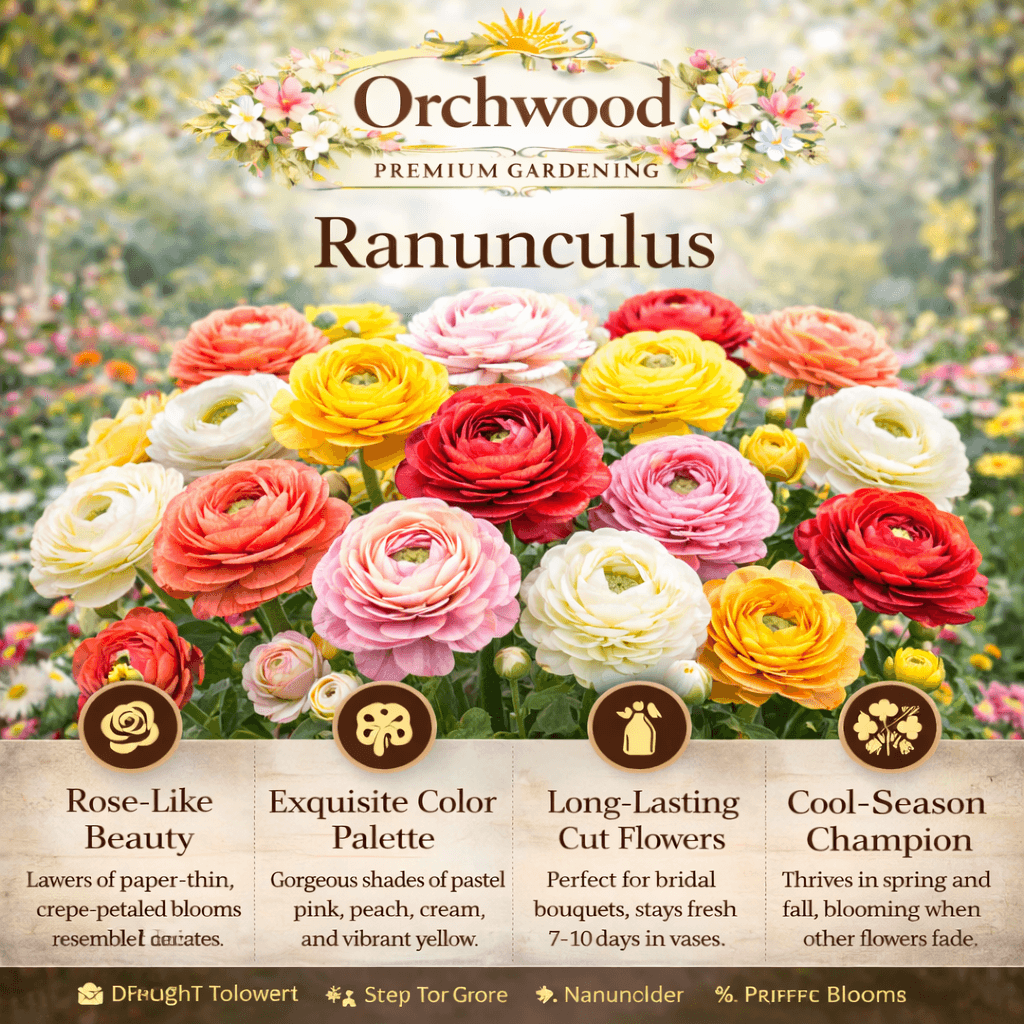
Ranunculus (Ranunculus asiaticus) produce some of the most exquisite flowers in the garden — tight spirals of paper-thin petals layered like tiny roses in glowing yellows, whites, and mixed color blends. They're among the most popular wedding flowers and highly sought after by florists. Growing 12 to 18 inches tall, they bloom in spring and are outstanding in both gardens and bouquets.
Pre-Planting: Soaking & Pre-Sprouting
Ranunculus corms look like small, dried octopus tentacles. Before planting, soak corms in lukewarm water for 3 to 4 hours — they'll plump up to roughly double their size. Don't soak longer than 4 hours, as they'll rot. For best results, pre-sprout after soaking: place soaked corms on 1 inch of damp growing mix in a seed tray, cover with 1 inch more mix, and keep in a cool, dark place (50-60°F) for 10 days. Plant out when white roots are visible.
Planting
Plant corms 2 inches deep with the claw (tentacle) side pointing down. Space 4 to 6 inches apart. In zones 8-10, plant in fall for spring blooms. In colder zones (4-7), plant in late winter to early spring after the last hard frost. Choose full sun and rich, well-drained soil. Amend clay-heavy soils with sand or compost to ensure drainage.
Watering & Care
Keep soil consistently moist but not waterlogged — overwatering causes corm rot. Ranunculus prefer cool temperatures and bloom best in spring's mild weather. They decline when temperatures regularly exceed 80°F. Feed lightly with a balanced fertilizer when shoots emerge.
Harvesting
For cut flowers, harvest when buds are soft like a marshmallow and showing color but not fully open. They'll continue to open and last 7 to 10 days in a vase. Ranunculus pair exquisitely with anemones, tulips, and lisianthus in spring arrangements. After flowering, let foliage die back, then lift and store corms in a cool, dry place for replanting.