
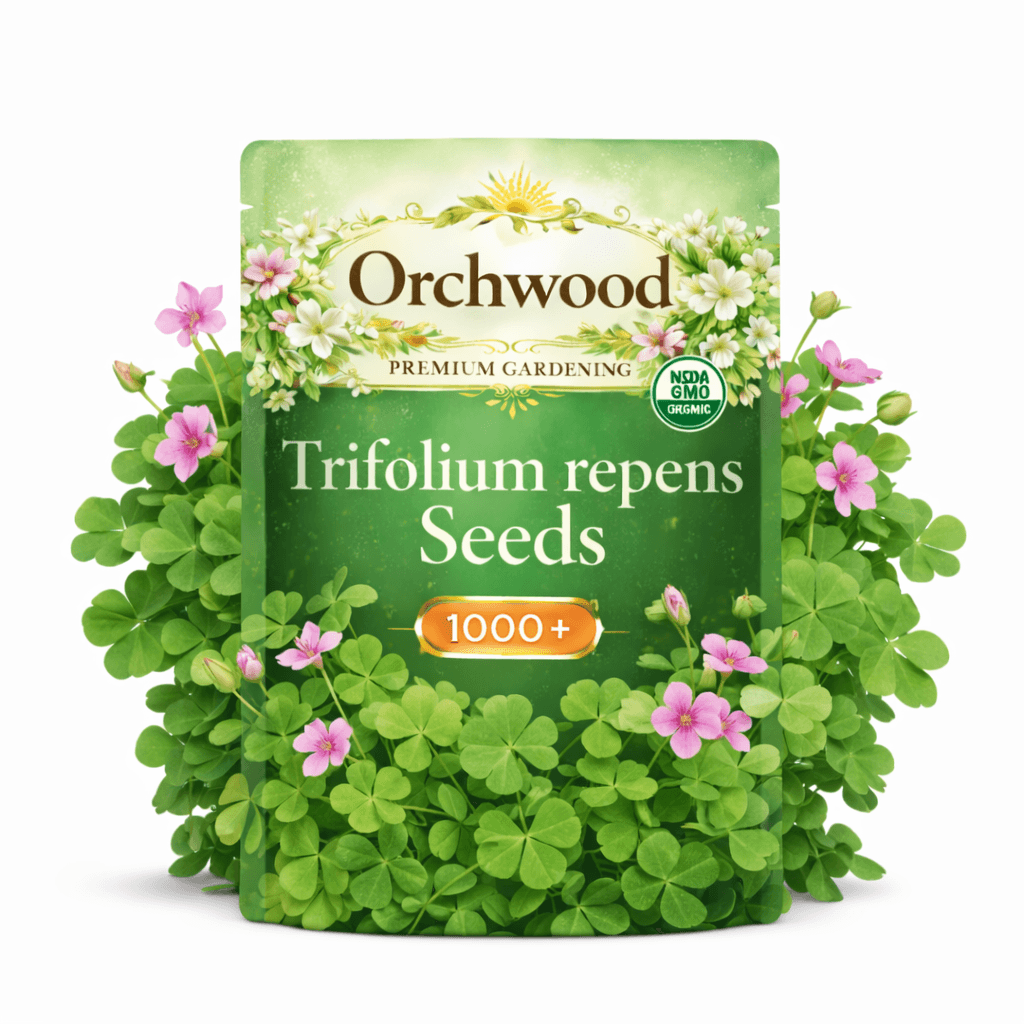
About White Clover
White clover (Trifolium repens) is a nitrogen-fixing legume that works as both a ground cover and a lawn alternative. Its dense, low mat of three-lobed leaves stays green even during drought conditions that would brown out traditional grass. Miniature varieties grow just 2 to 4 inches tall and tolerate heavy foot traffic. Best of all, clover never needs fertilizer because it produces its own nitrogen through a symbiotic relationship with soil bacteria — and it feeds neighboring plants too.
Planting from Seed
White clover is incredibly easy to establish from seed. Scatter seeds over prepared soil in spring or early fall at a rate of about 2 ounces per 1,000 square feet. Rake lightly to ensure seed-to-soil contact, then water gently. Seeds germinate in 7 to 14 days when soil temperature is above 50°F. No special treatment or indoor starting is needed. For overseeding into an existing lawn, mow the grass short first and scatter seeds over the thinned areas.
Growing Conditions
White clover grows in full sun to partial shade and adapts to nearly any soil type, including clay and poor soil. It actually improves soil over time by fixing atmospheric nitrogen into the root zone — neighboring plants benefit from this nitrogen boost. It tolerates a wide pH range (5.5-7.5) and handles both heat and cold well (zones 3-10).
Watering & Maintenance
Once established, white clover is remarkably drought-tolerant — it stays green when grass goes brown. Water new plantings regularly until established (2-3 weeks). After that, supplemental watering is rarely needed except during extended drought. Never fertilize clover — it makes its own nitrogen, and supplemental nitrogen actually reduces its vigor by favoring competing grasses.
Uses & Companions
Use as a lawn alternative, a living mulch between garden beds, or a ground cover around the base of taller plants. Clover planted around sunflowers, hollyhocks, or climbing roses feeds the soil with nitrogen while suppressing weeds and staying green with zero maintenance. Its white flowers attract bees and beneficial insects. Combine with creeping thyme for a mixed, fragrant, pollinator-friendly ground cover that never needs mowing or feeding.