
About Tulips
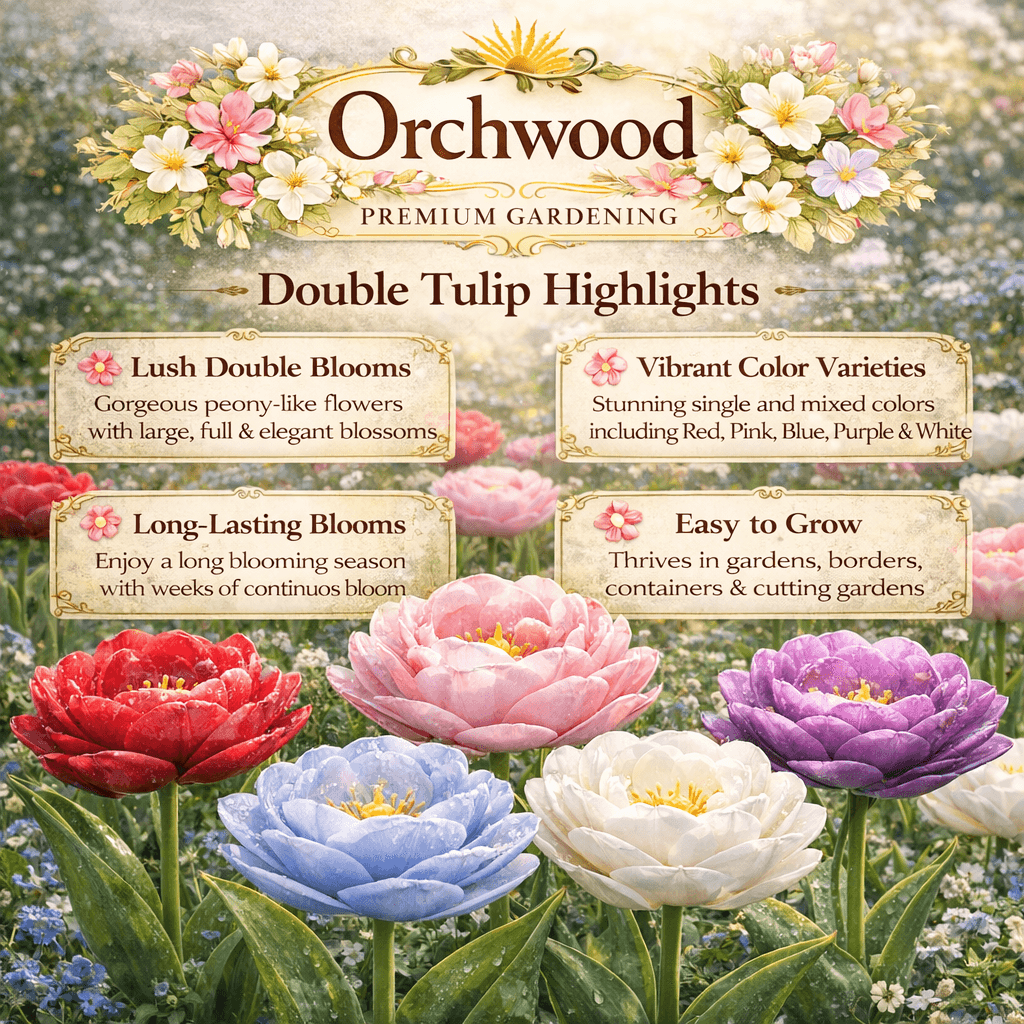
Tulips are the undisputed stars of spring gardens, offering an incredible range of forms and colors. Double tulips produce peony-like ruffled blooms with multiple layers of petals. Parrot tulips feature dramatically fringed, feathered petals in exotic color combinations. Native tulips offer elegant, classic forms closer to the original wild species. And single tulips deliver the iconic cup-shaped bloom in clean, bold colors. All share the same basic planting requirements.
When and How to Plant
Plant tulip bulbs in fall, 6 to 8 weeks before the ground freezes — typically September through November depending on your zone. Plant bulbs 6 to 8 inches deep with the pointed end up in well-drained soil. Space 4 to 6 inches apart. Plant in groups of at least 10 for visual impact. Parrot tulips, with their heavier blooms, benefit from a slightly more sheltered location to protect their dramatic flowers from wind damage.
Growing Conditions
Choose a spot with full sun (6+ hours daily) and well-drained soil with a neutral to slightly acidic pH (6.0-7.0). Waterlogged soil over winter causes bulb rot — this is the number one cause of failure. If your soil is heavy clay, plant in raised beds or amend with sand and compost. Tulips grow best in zones 3 to 7, where they receive the cold winter dormancy period they need.
Care Through the Season
Water bulbs after planting in fall to help establish roots. During the growing season, keep soil moderately moist but never soggy. Deadhead spent flowers promptly to prevent seed production, which drains energy from the bulb. Critically, do not cut the foliage until it has yellowed and died back completely — the leaves are photosynthesizing to recharge the bulb for next year's bloom. This takes about 6 weeks after flowering.
Companion Planting
Tulips pair beautifully with hyacinths (for fragrance), forget-me-nots (as a blue carpet beneath), and pansies (for cool-season color). Overplant bulb beds with summer annuals like cosmos or marigolds to fill the space as tulip foliage fades. For a stunning layered display, plant tulips at 8 inches deep with anemone corms at 3 inches above them in the same hole.